
Design and Development
Chronicles of Crocheting: Articulate Storyline Project
Project Summary
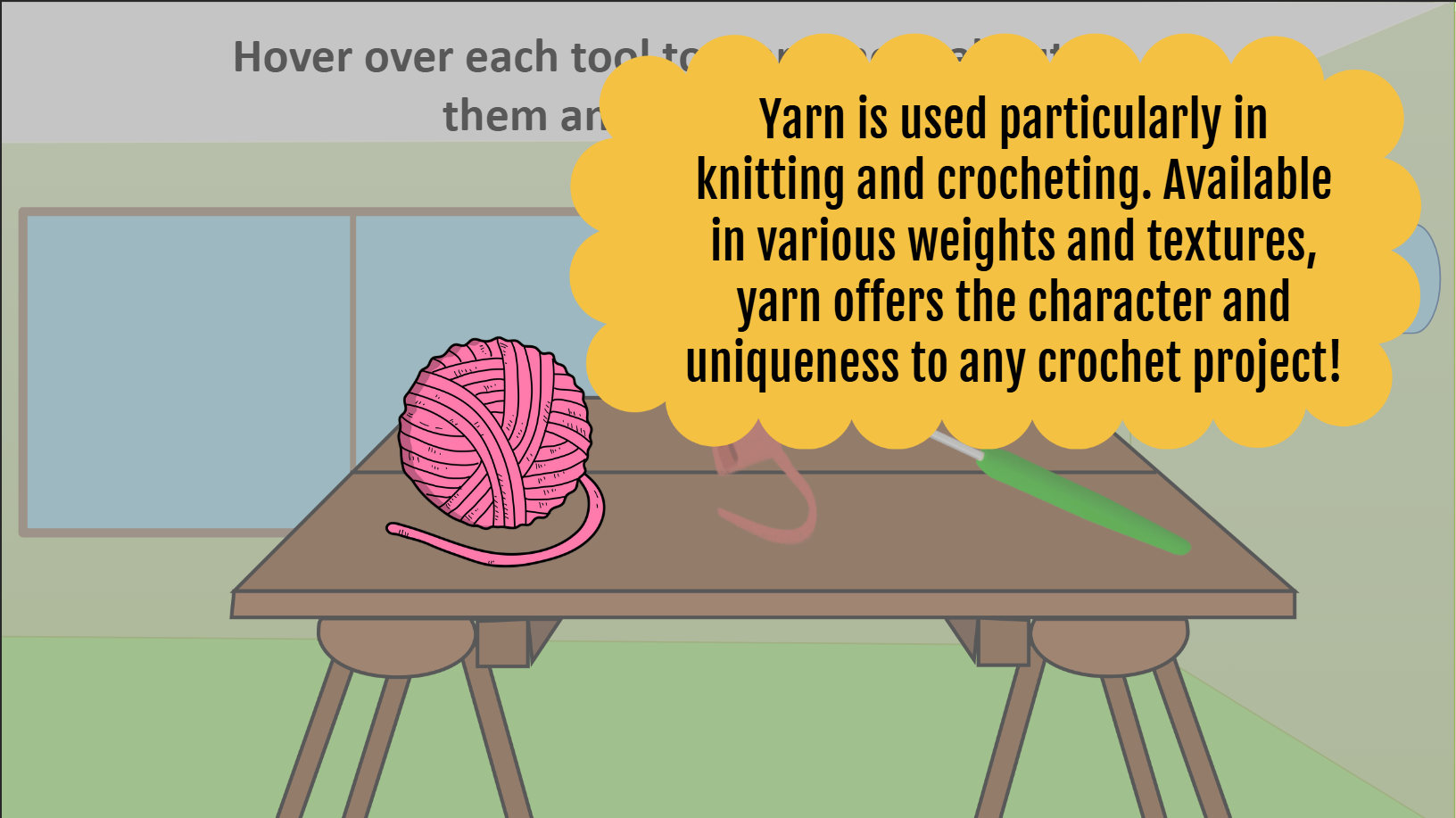
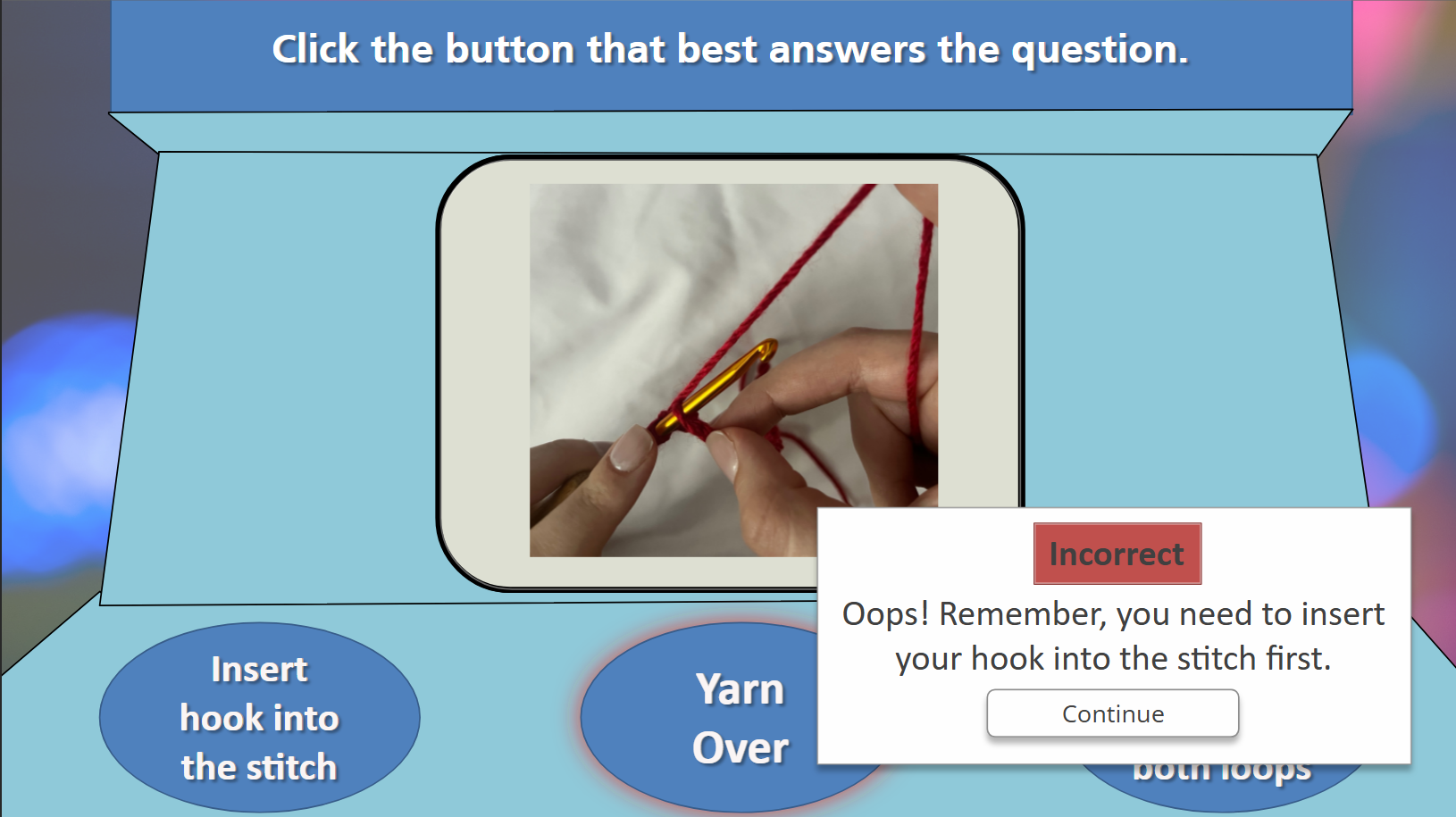
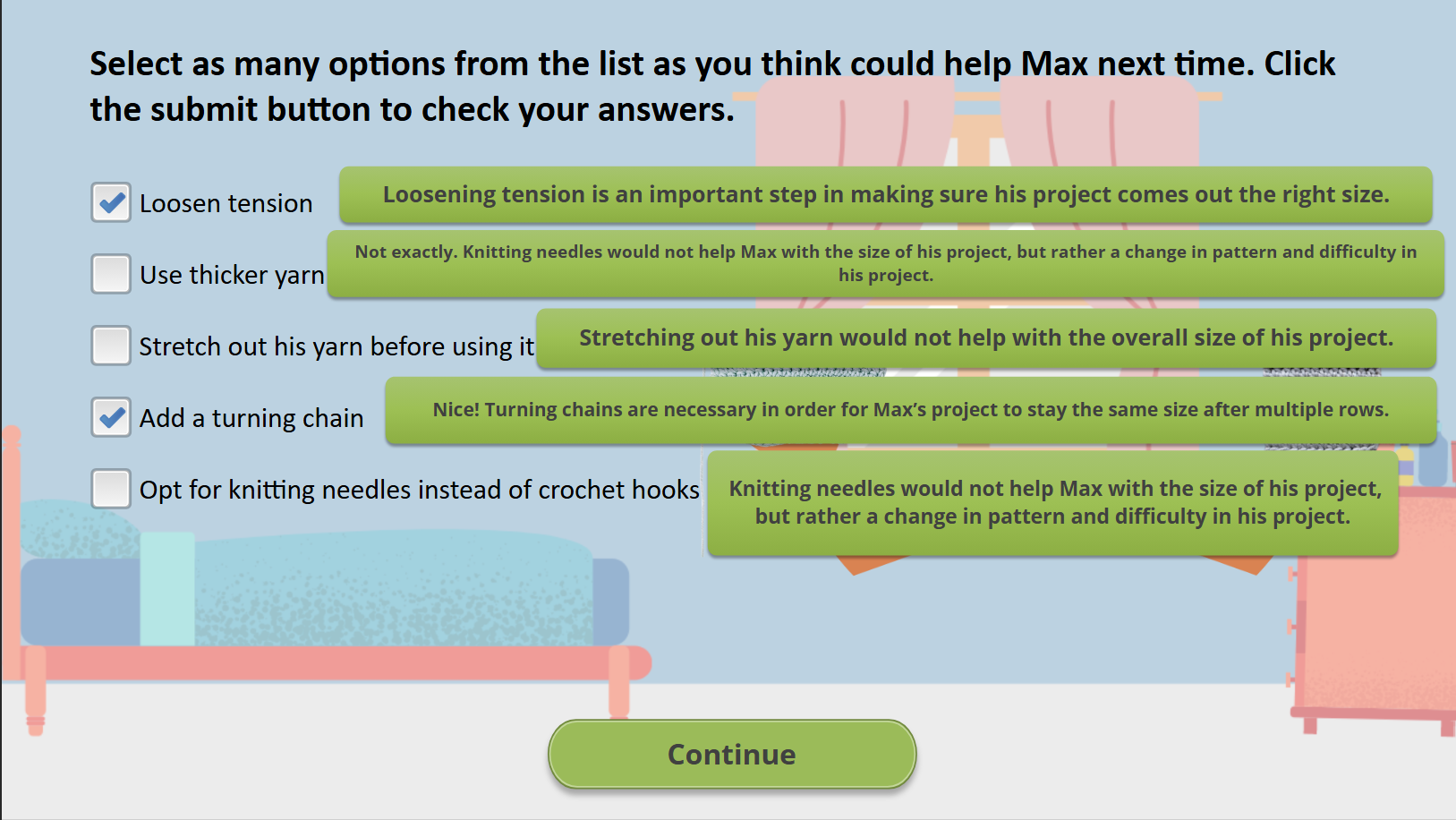
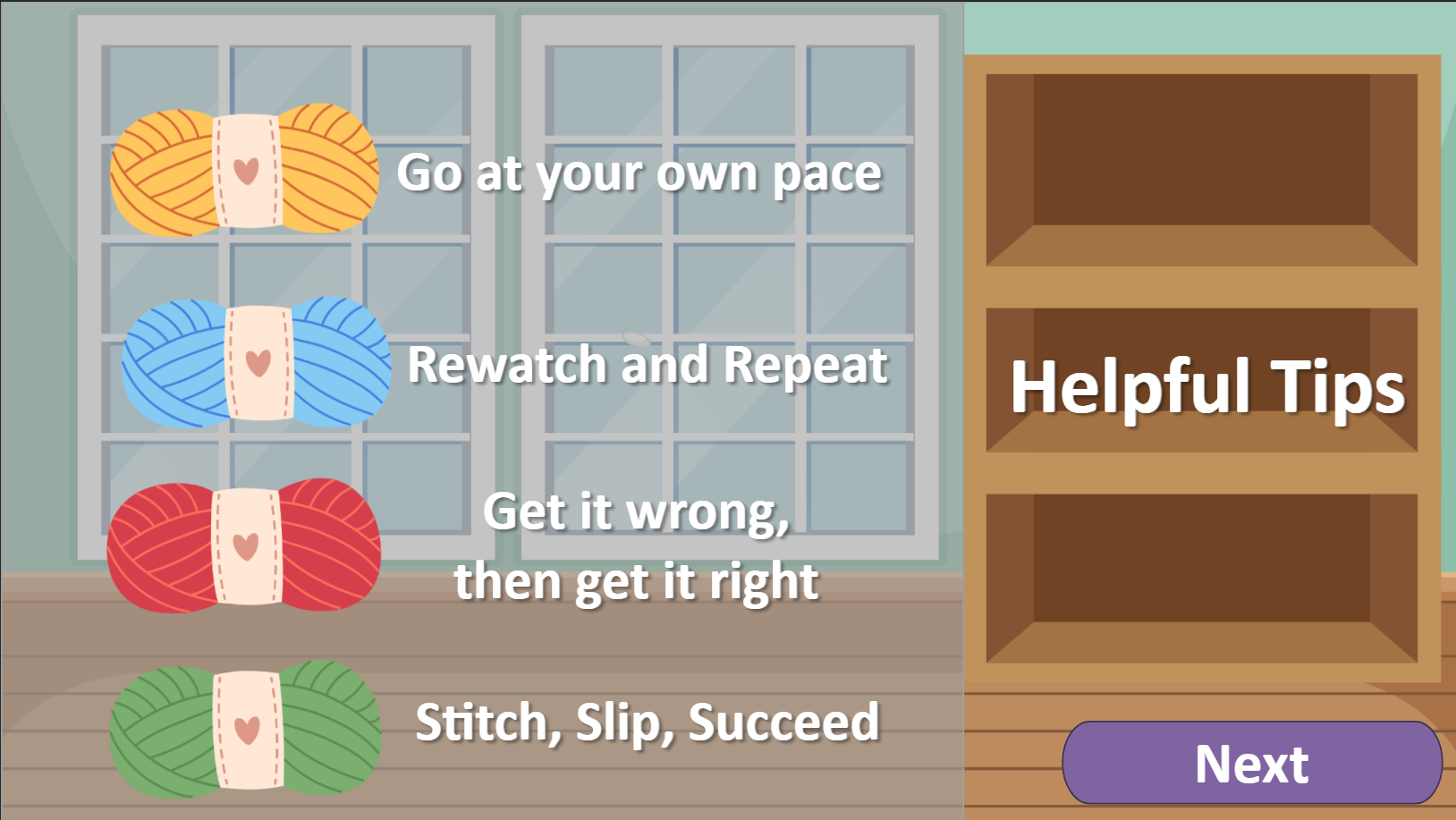
My background in multimedia and graphic design was an area expertise that I often used in my previous positions. Because of this, my strengths out of the entire ADDIE process were centered around design and development. Using Articulate Storyline was the first point in my ID career that it felt like I had unlimited possibilities for creating what I had envisioned. As one of my first instructional design projects, I wanted to design a course that encouraged learning, yet implemented several interactive elements that allowed the learner to be a part of the experience. I’m often the person that just jumps into a new hobby, buys the material and tools needed, and watches my first tutorial to get hands-on experience. However, I knew family members and friends who were different, opting to get a better understanding before immediately spending money on a hobby they may never do again. Because of this analysis, I decided on my targeted audience to be individuals interested in crocheting, but hesitant to start, allowing the course to offer a safe “starting point” for those individuals.
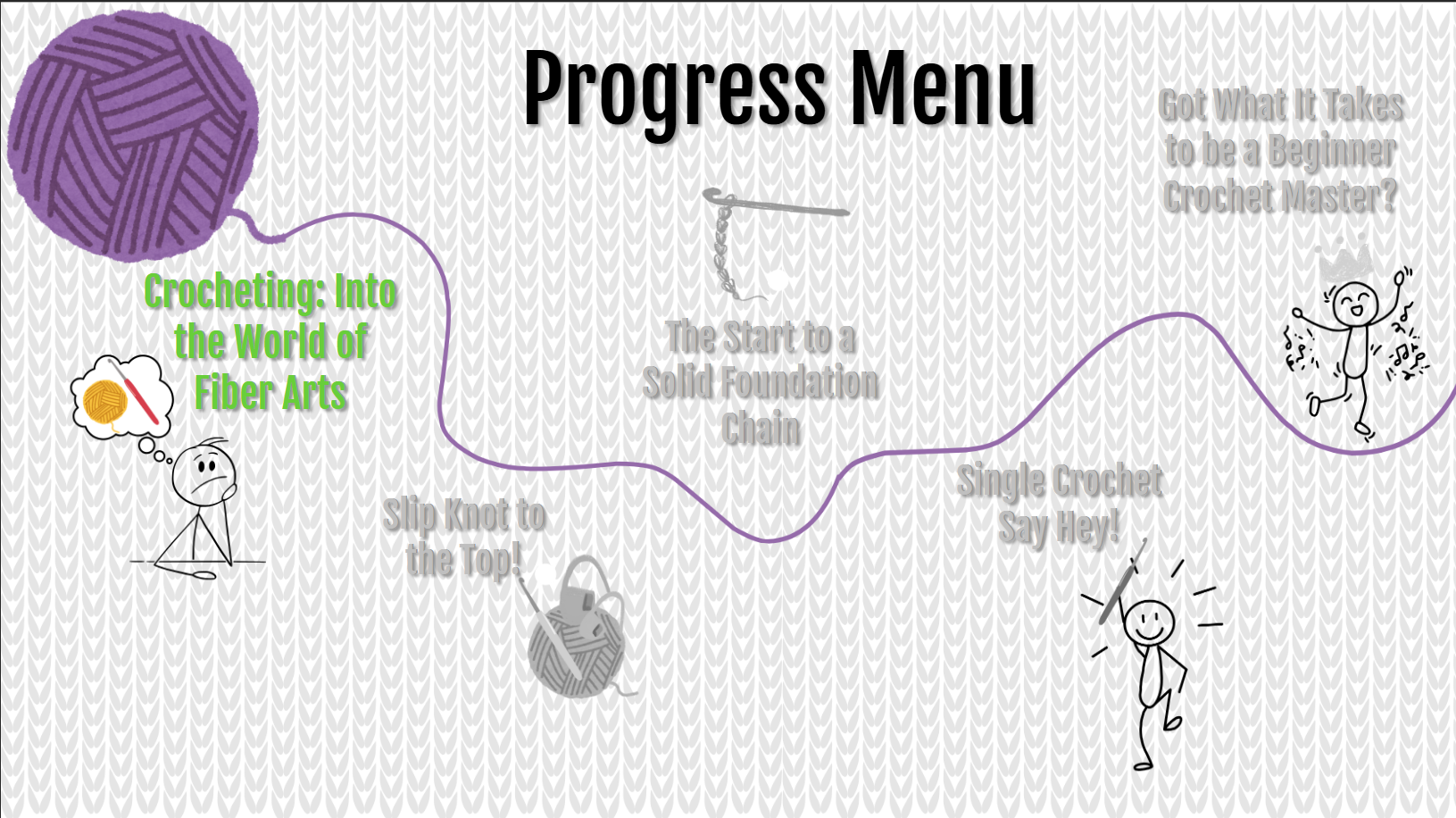
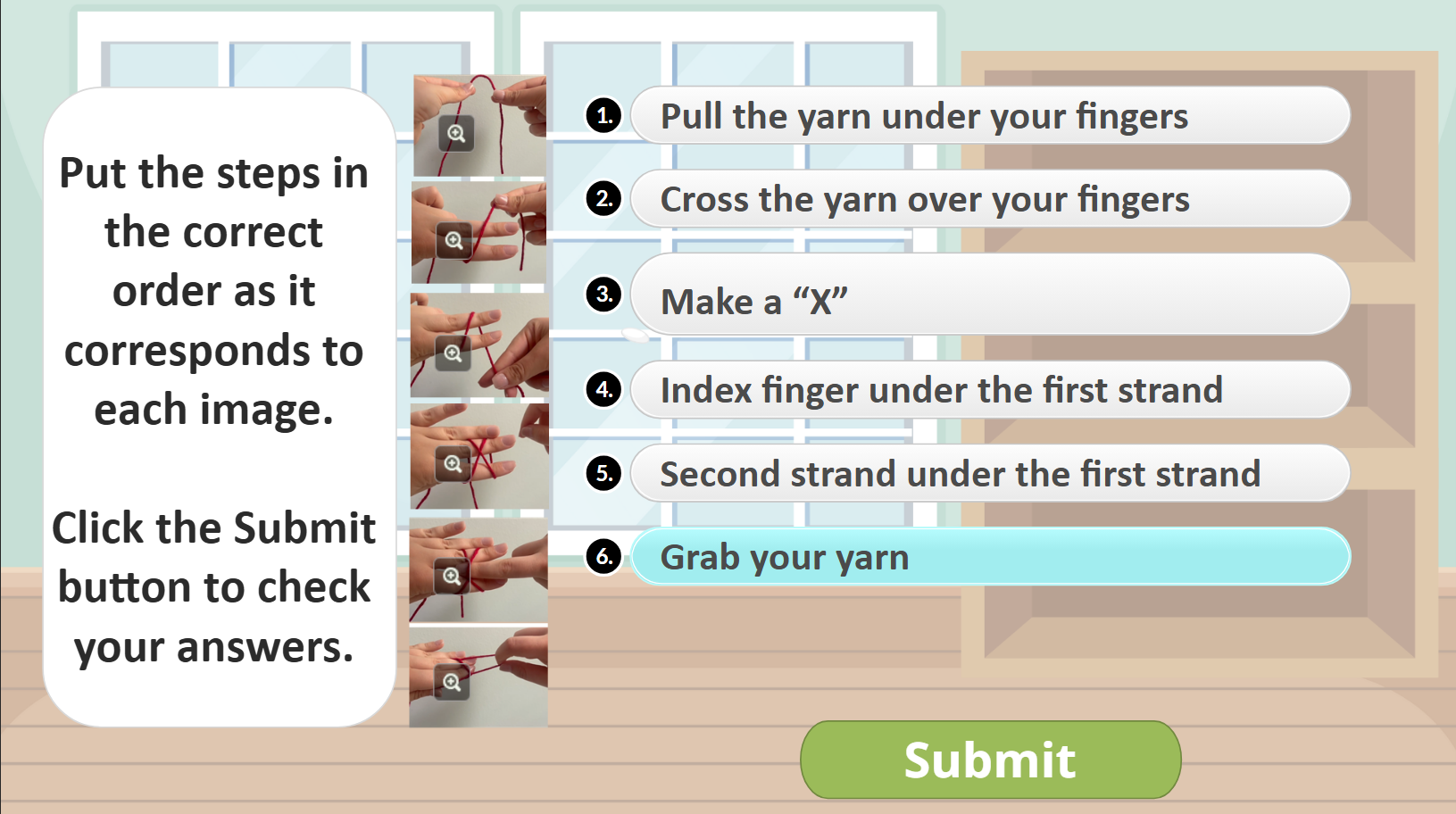
Guided by theories such as Mayer’s Principles for Multimedia Design and Constructivism Learning Theory, designing and developing a beginner course meant that several of the activities reinforced the information learned in lessons, consistently providing feedback whenever a wrong answer was chosen. The scaffolded layout of the course allows learners to build knowledge based on the information provided in the prior lesson. Additionally, narrated and text instructions are provided for learners to create an accessible and inclusive experience. Ultimately to evaluate the effectiveness of the course, a survey was implemented at the end to gauge the learner's virtual crocheting experience. There were many instances of trial and error - moments where I wanted a trigger to do a specific function that was planned out in my head, but I had no idea how to implement it in the program. Although this was frustrating, the time, effort, and growth I experienced with the creation of this course is what made me choose this artifact and project as a representation of my design and development skills.
Podcast Workflow Course
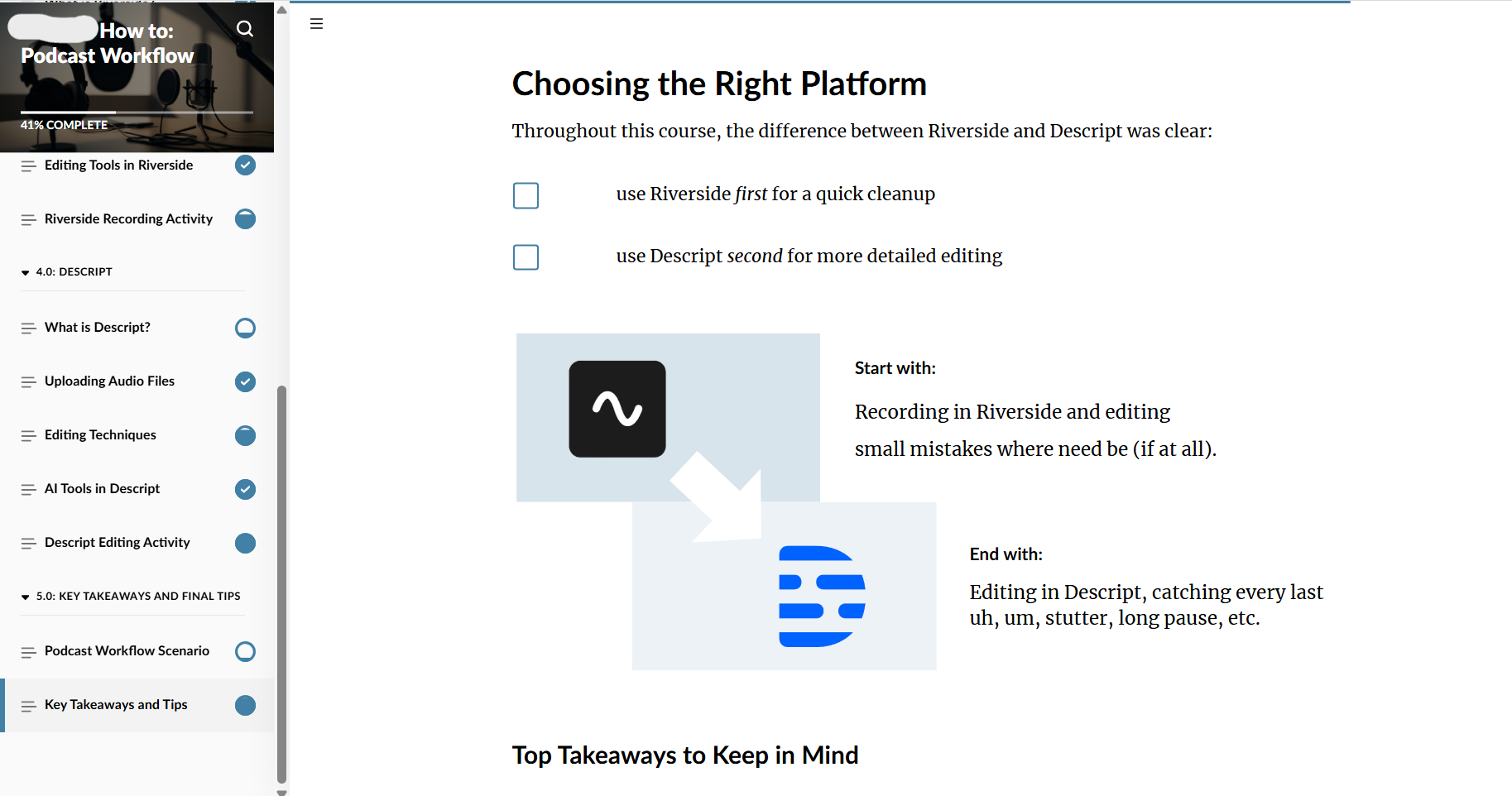
Project Summary
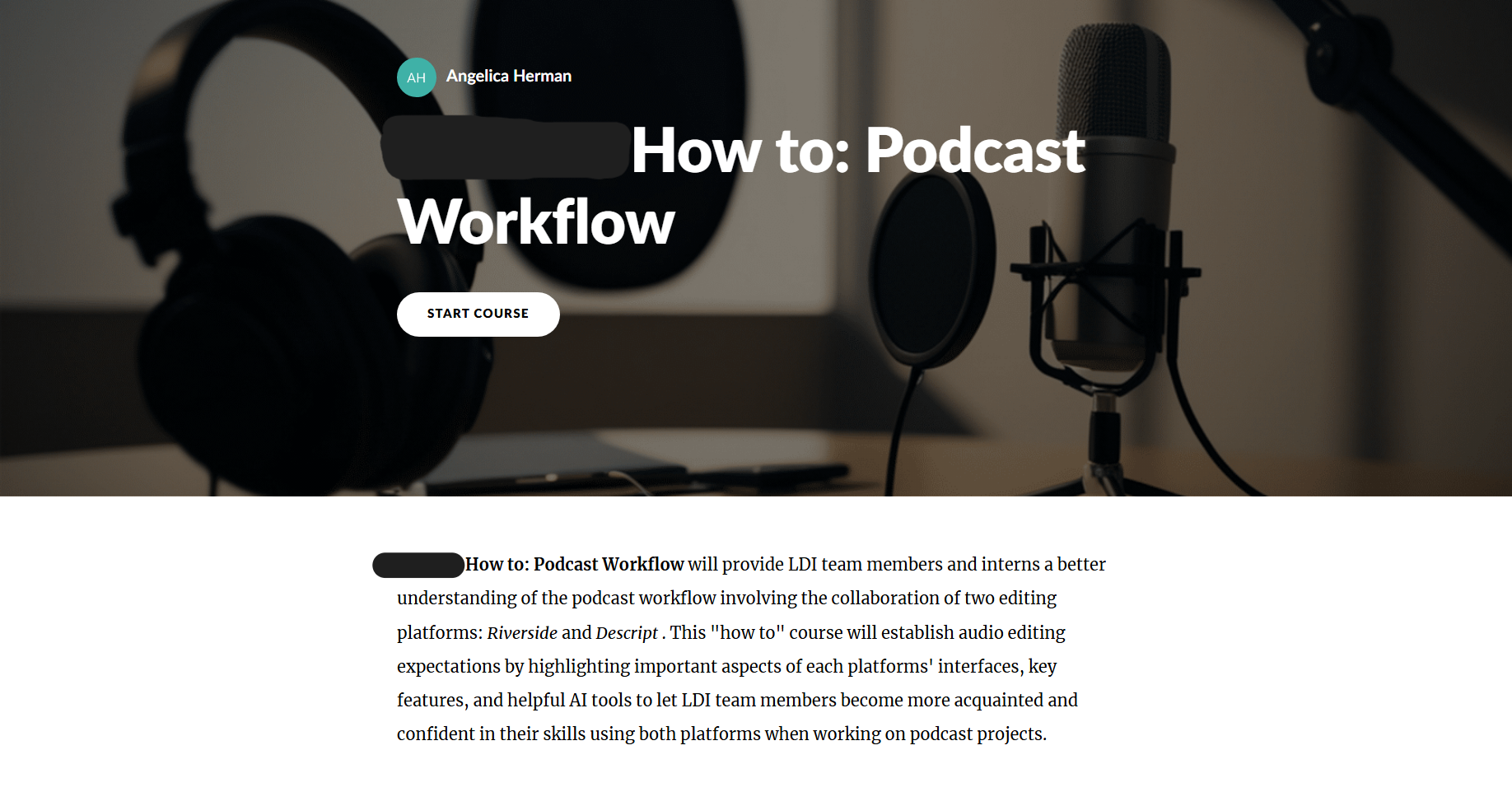
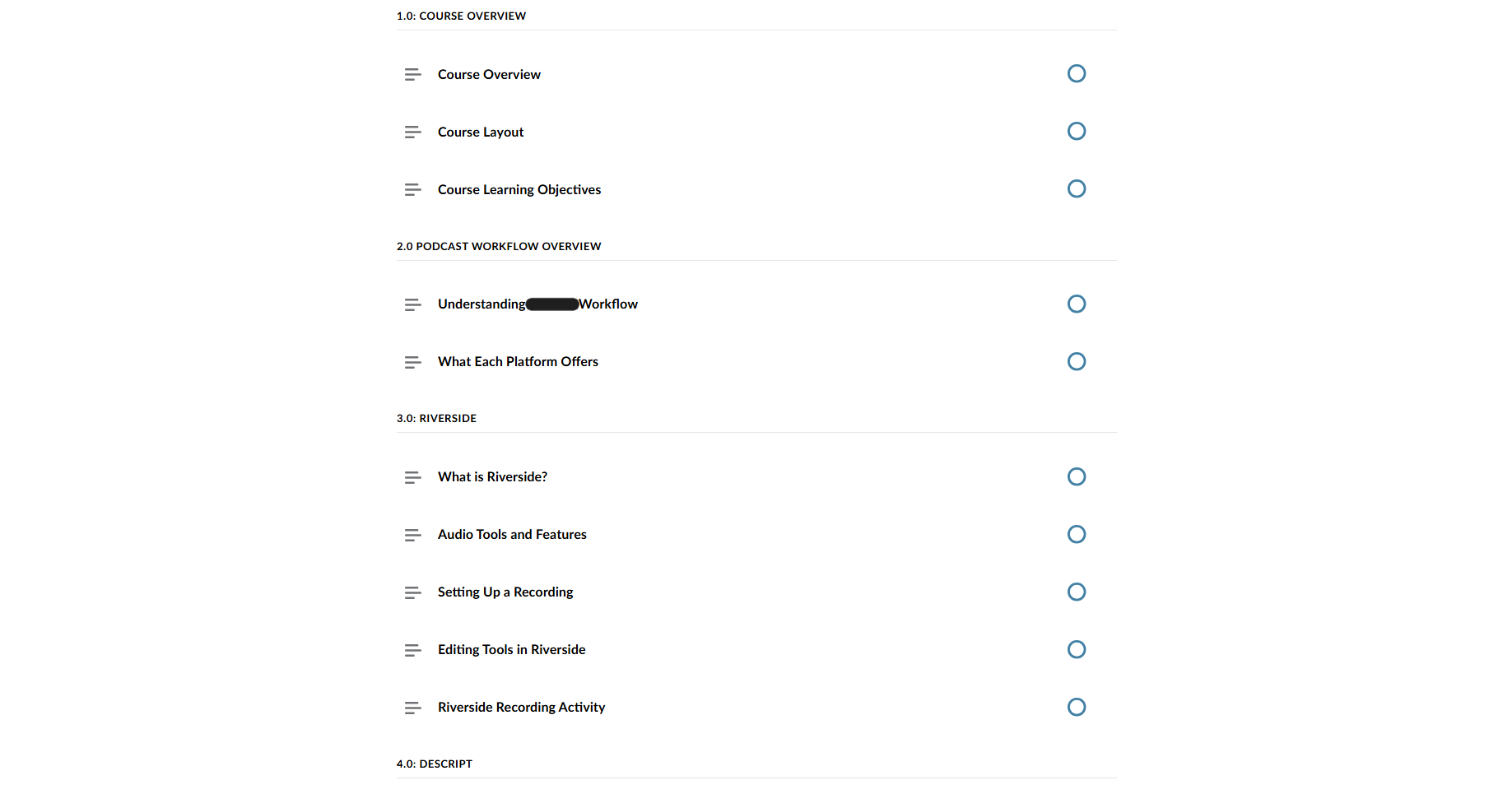
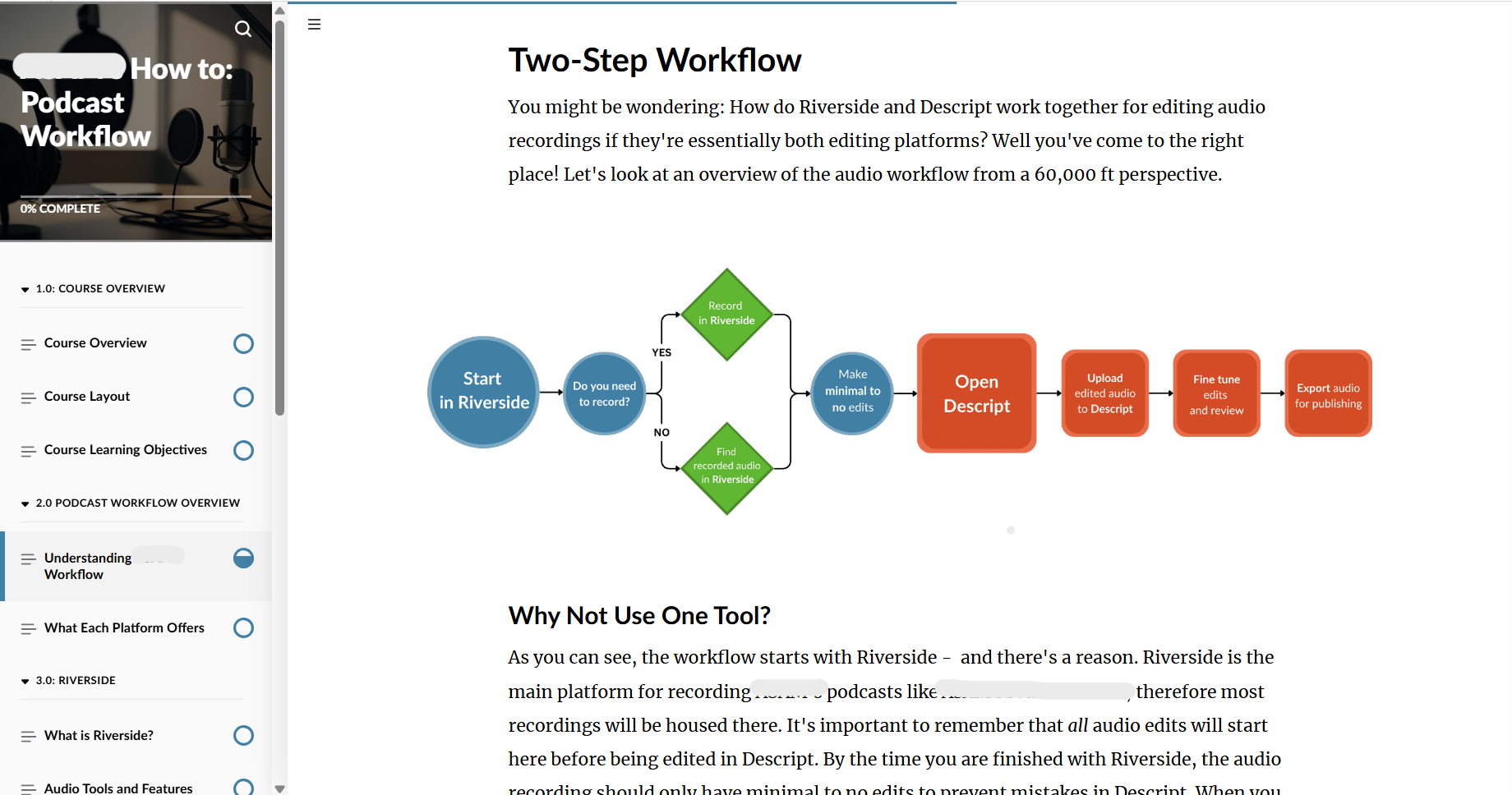
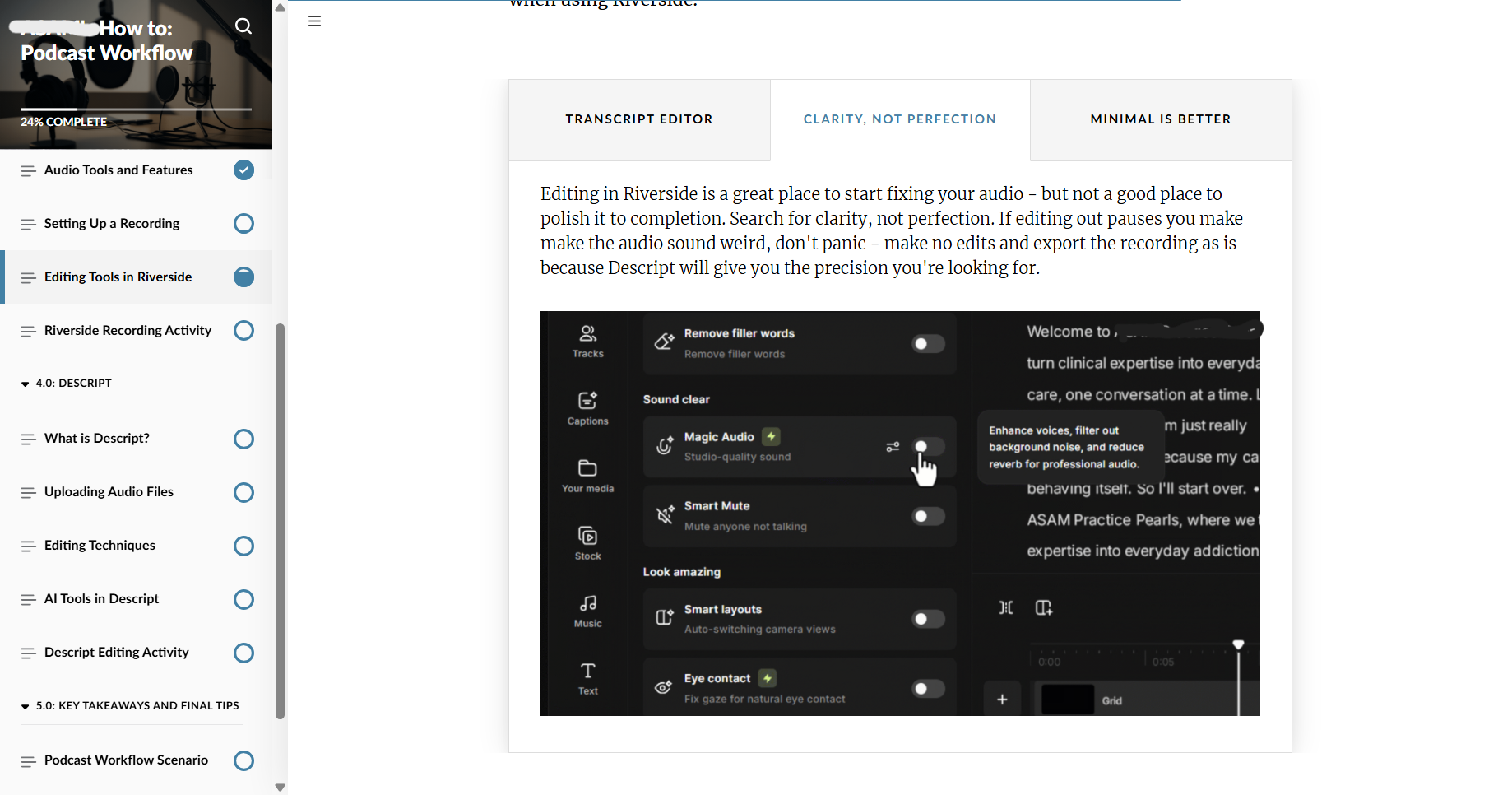
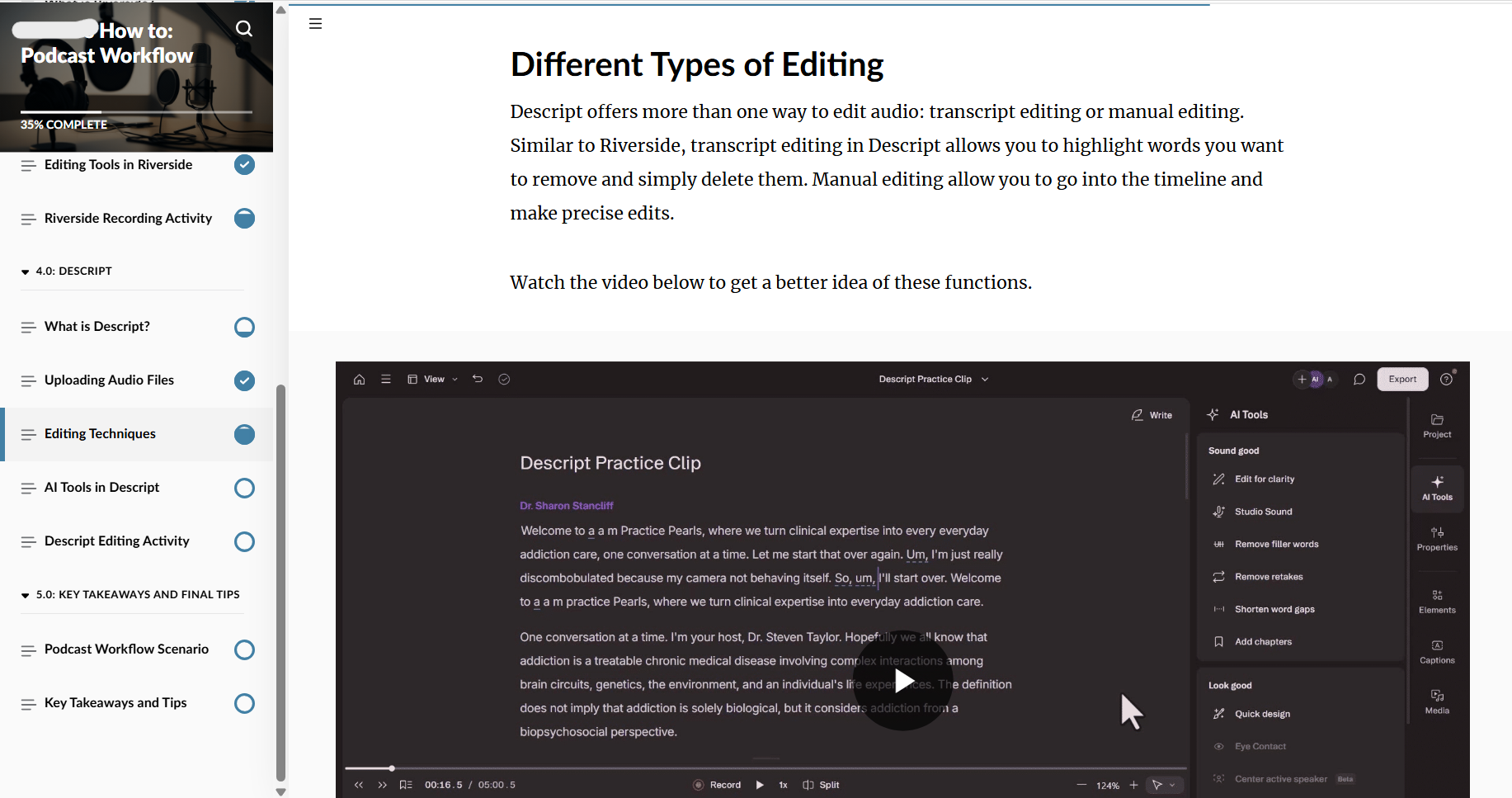
I had the opportunity to work as an instructional design intern for the not-for-profit organization that specializes in addiction education. During my internship I helped design and develop a five module course to assist future interns with understanding the organization’s podcast workflow. I approached my client with design decisions based on their needs, client revisions, and overall to ensure that I was successfully creating a course that is effective for their targeted audience. After being presented with the topic, I began to assess the most important aspects that needed to be touched on in the course. One of the senior managers specifically in charge of podcasts offered me a better understanding of the objectives they wanted future interns to achieve. Afterwards, the design and development process was structured by establishing one introduction module, three content modules, and one exit module, with all content modules including at least one interactive activity for learners to engage with.
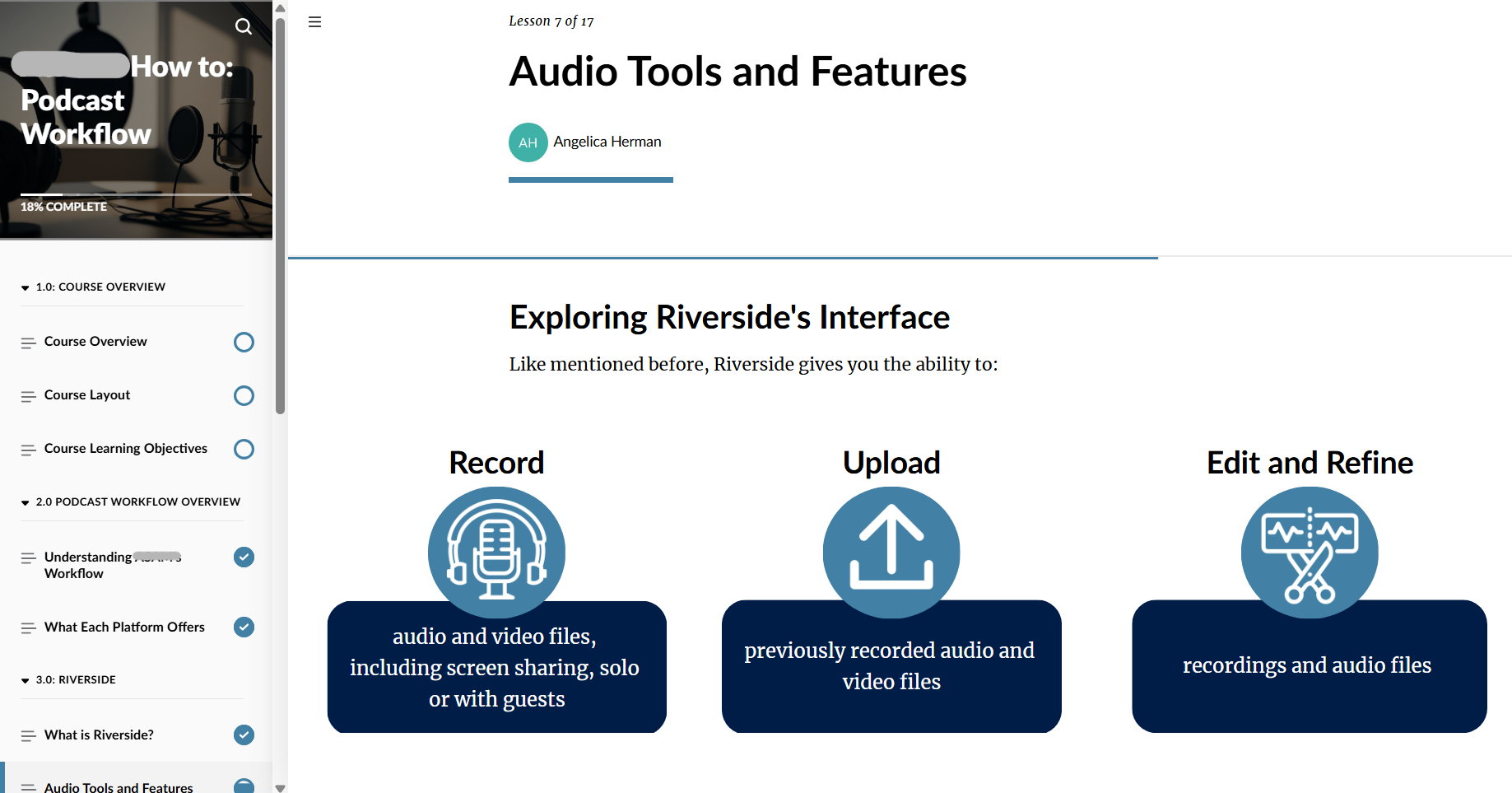
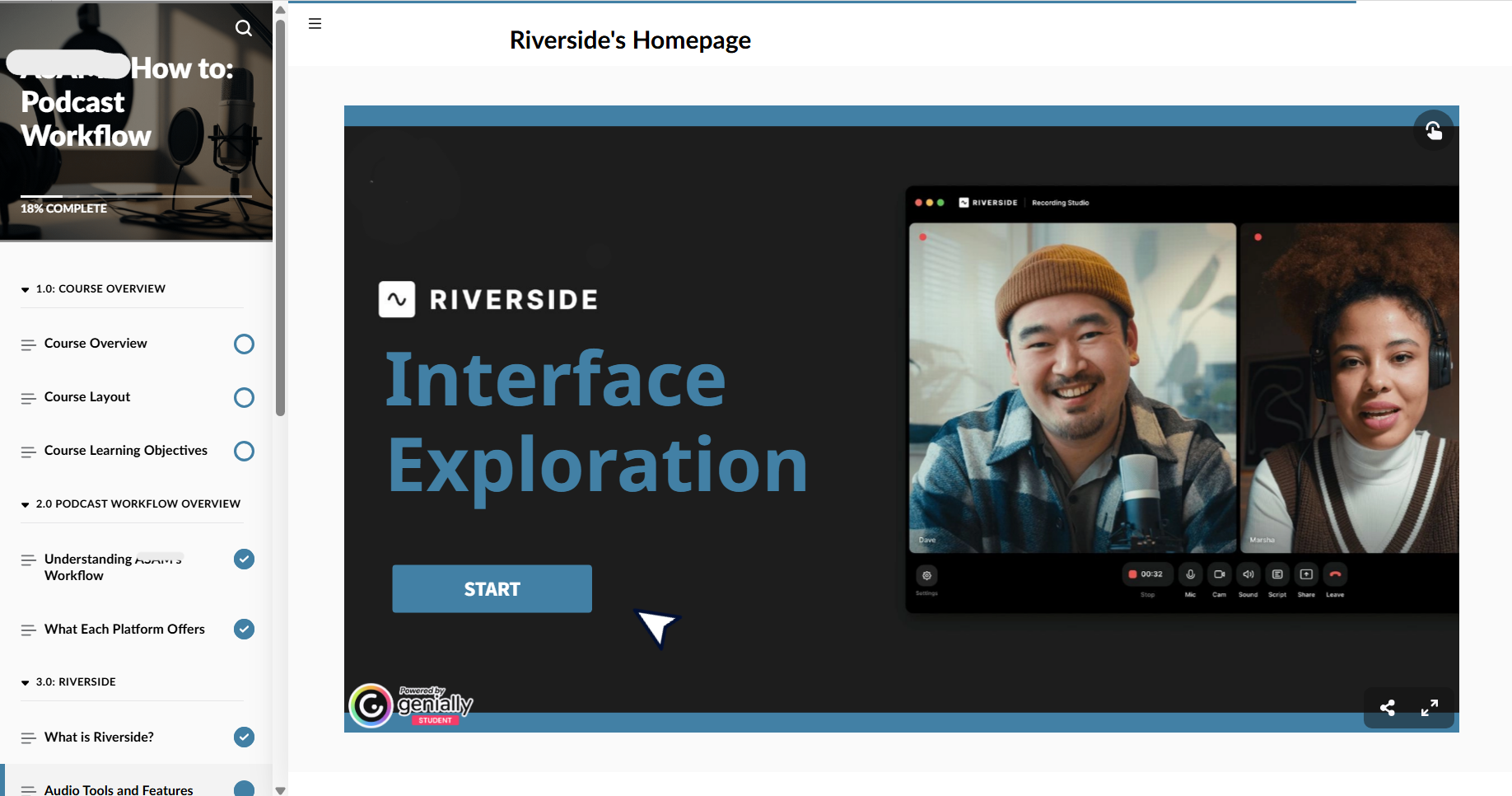
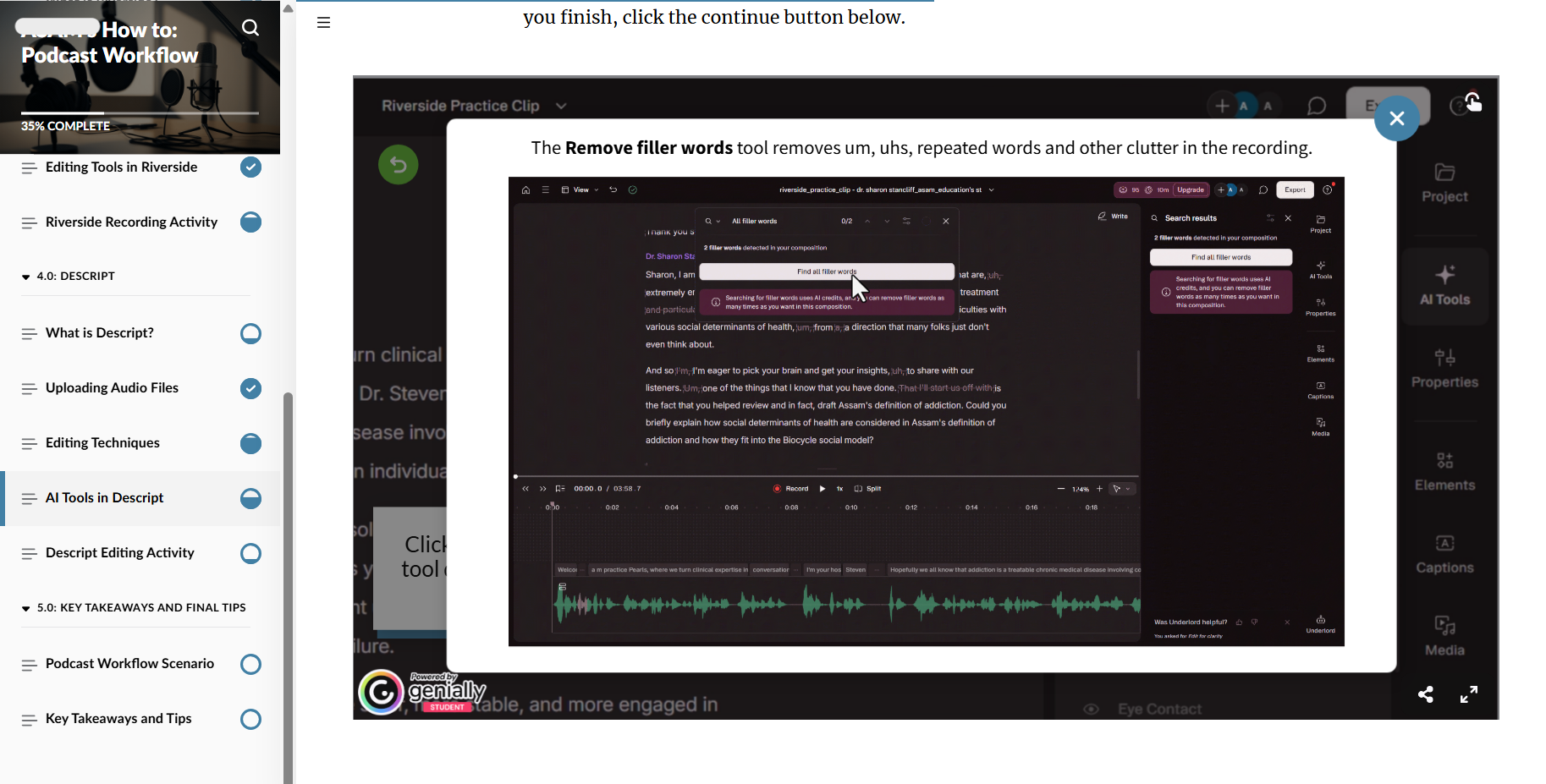
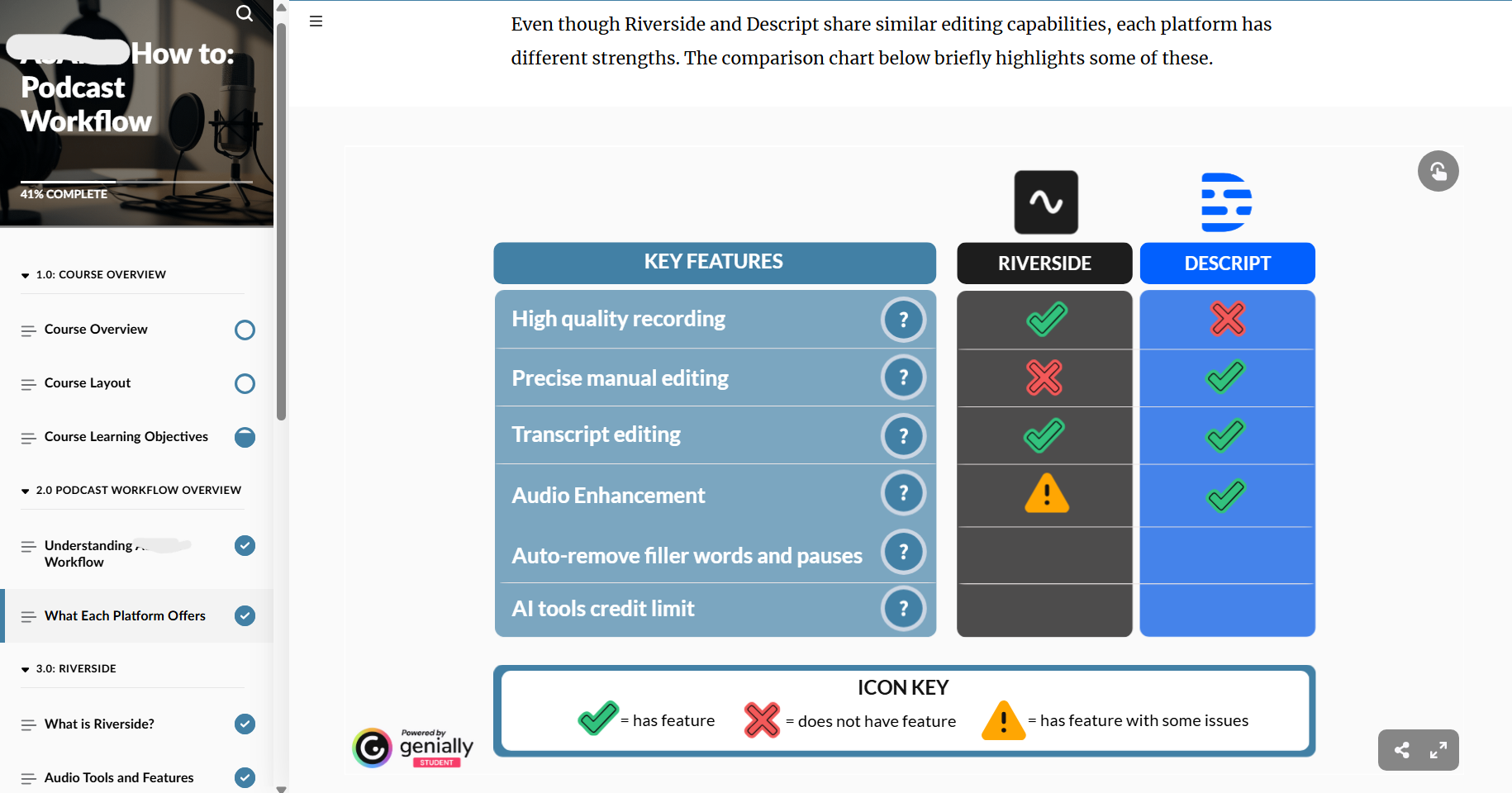
Within this course I crafted checklists targeted for podcast edits, recorded, edited, and narrated instructional videos showcasing the podcast recording and editing platforms utilized by the organization, and built interactive experiences using the web platform Genially. Unlike my previous project in Articulate Storyline, this course was developed completely in Articulate Rise which followed the organization’s format for their online courses. Although I had prior experience with Rise, the chance to refresh my skills and implement some of the beta features into my work made me feel confident with the final product created for this course, and is planned to be implemented as a module in organization’s onboarding for future interns.