
Analysis
Auto Finance Company Needs Assessment Report
Project Summary
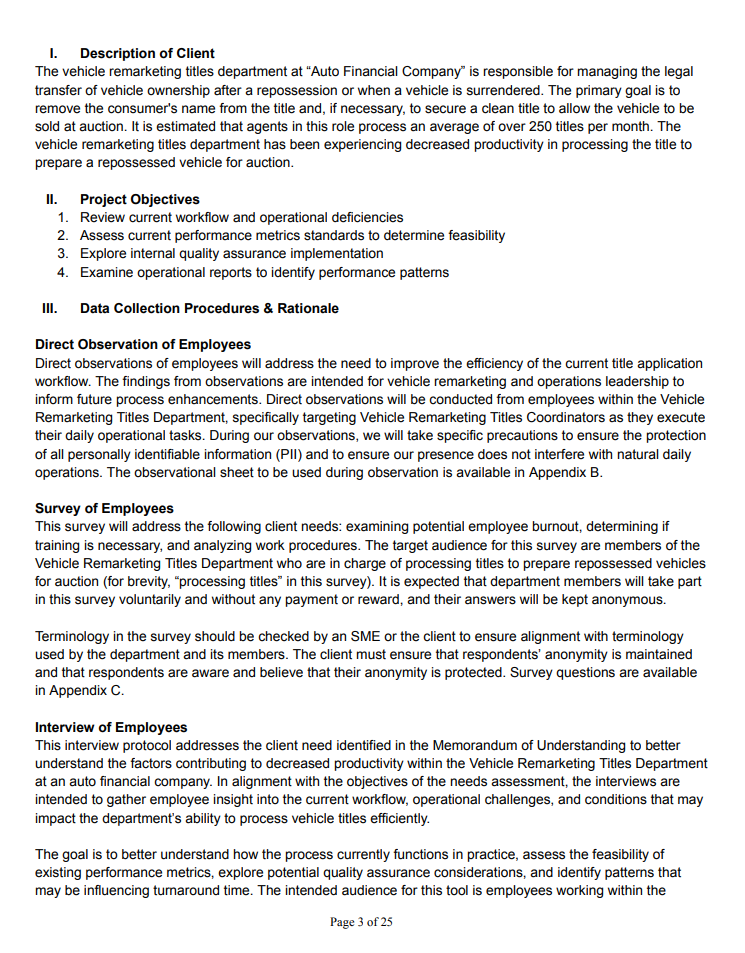
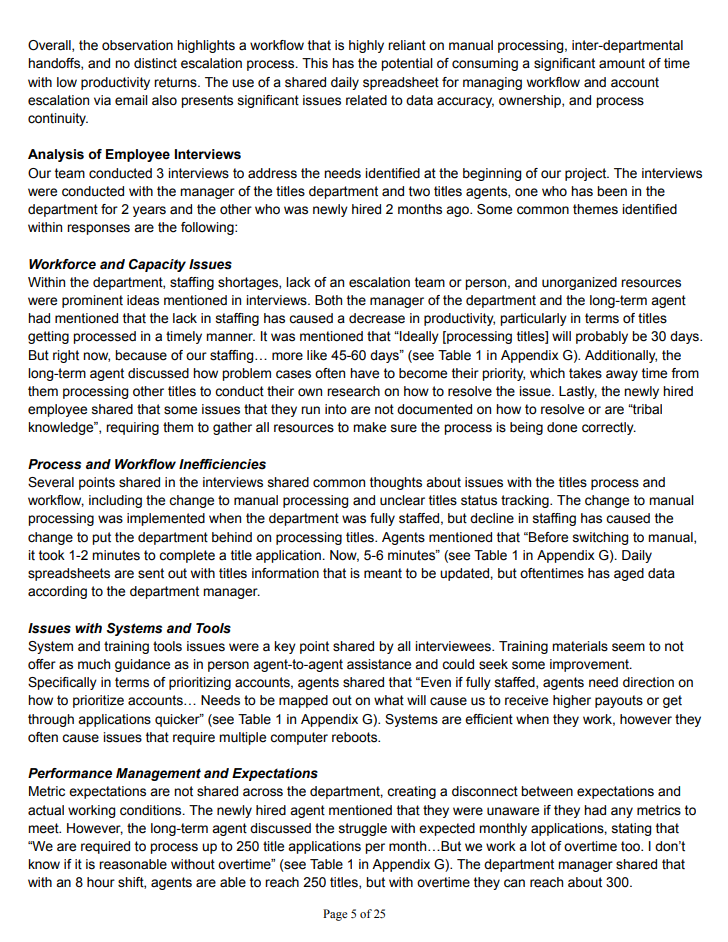
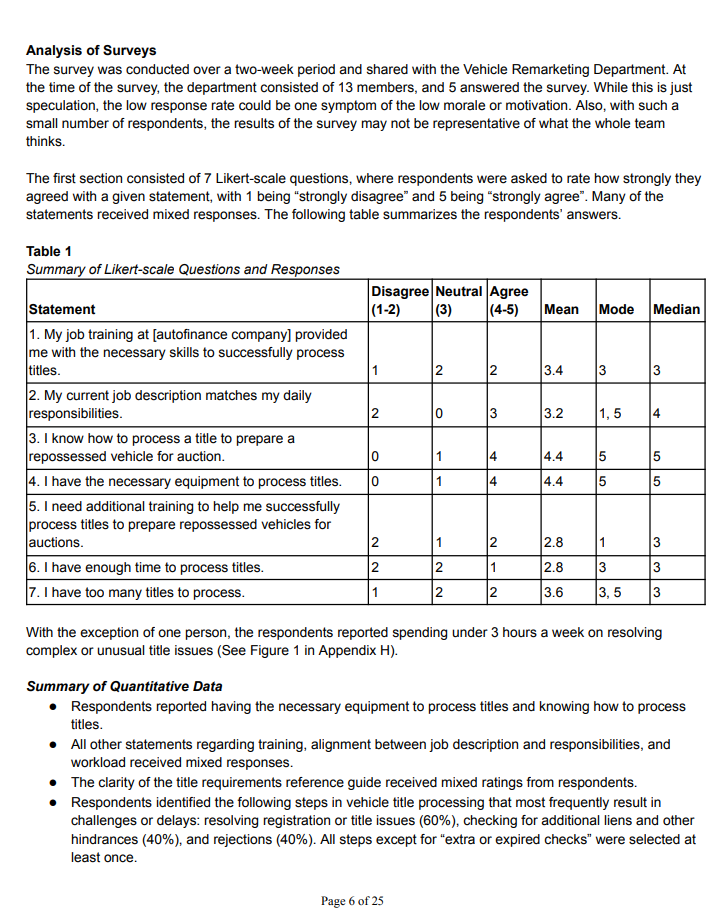
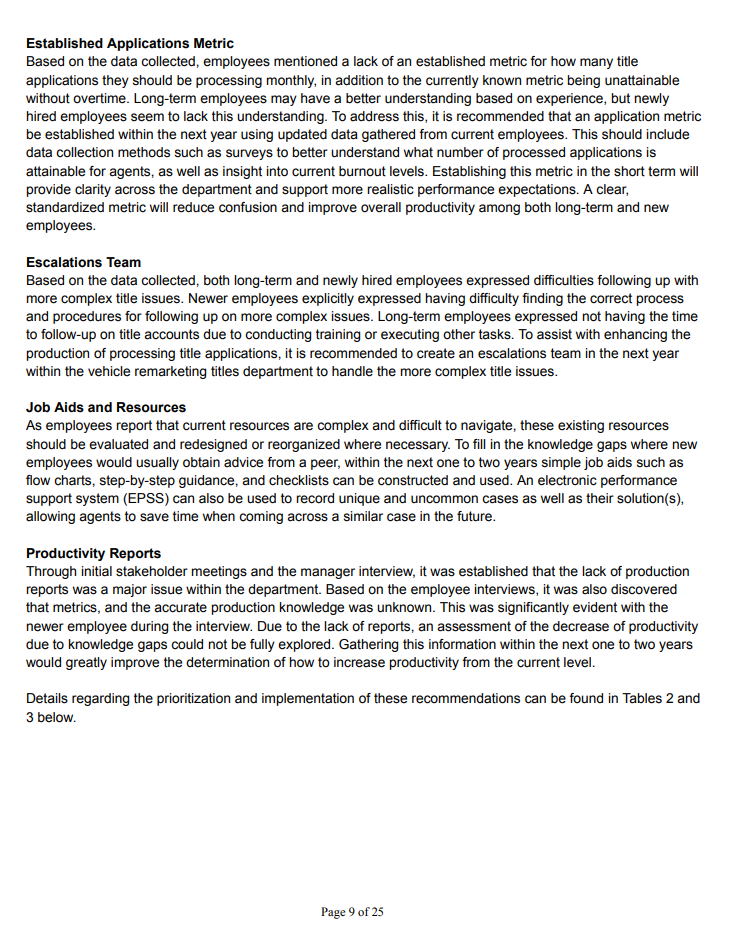
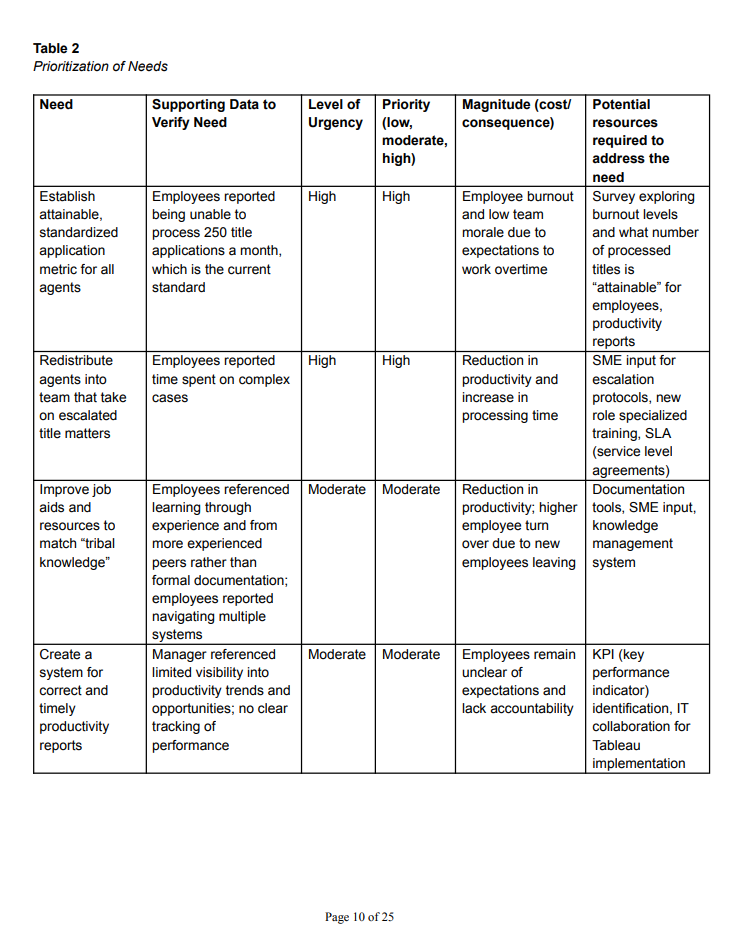
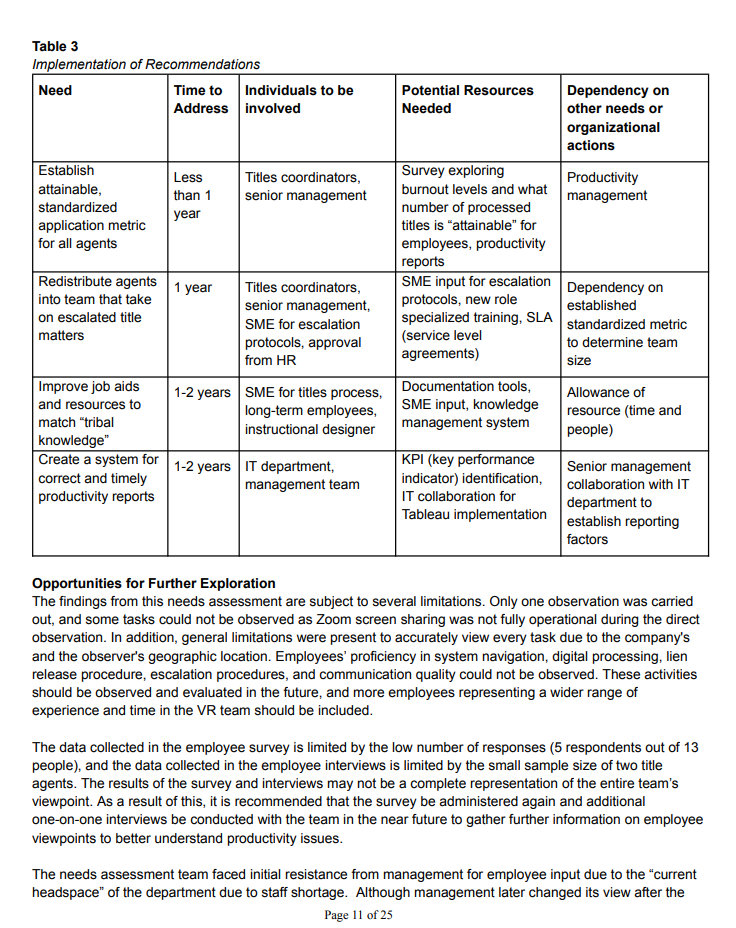
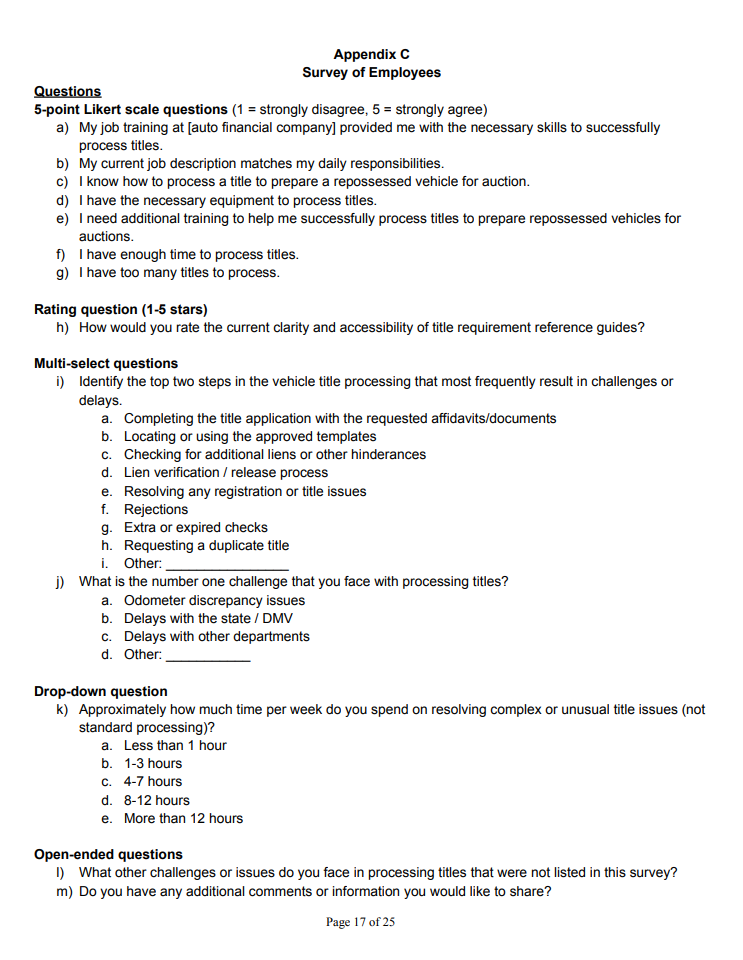
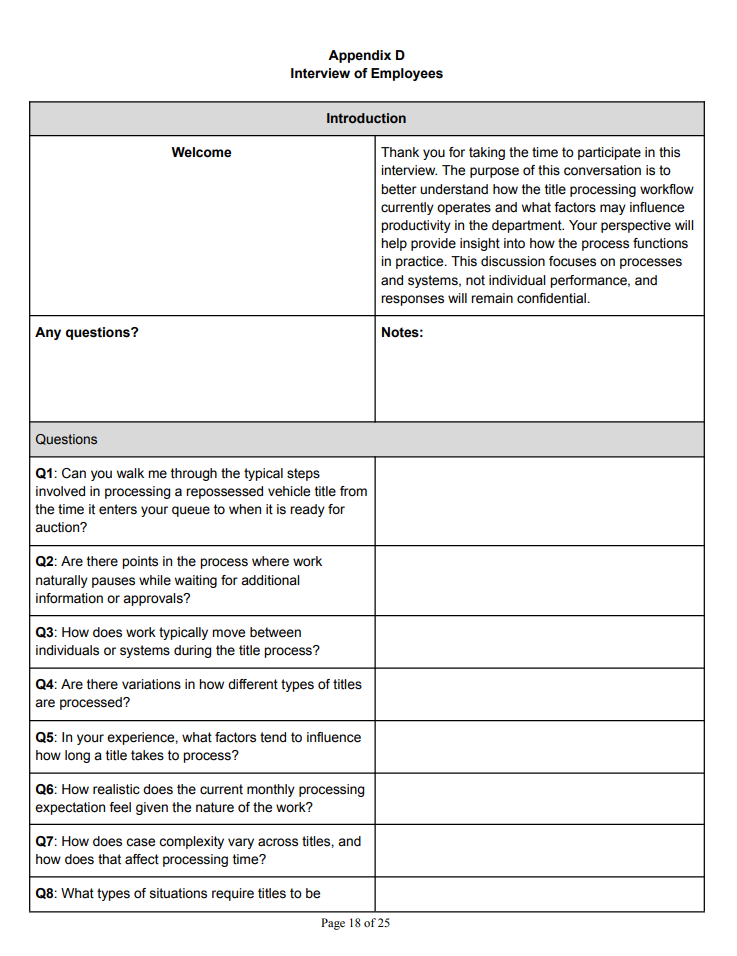
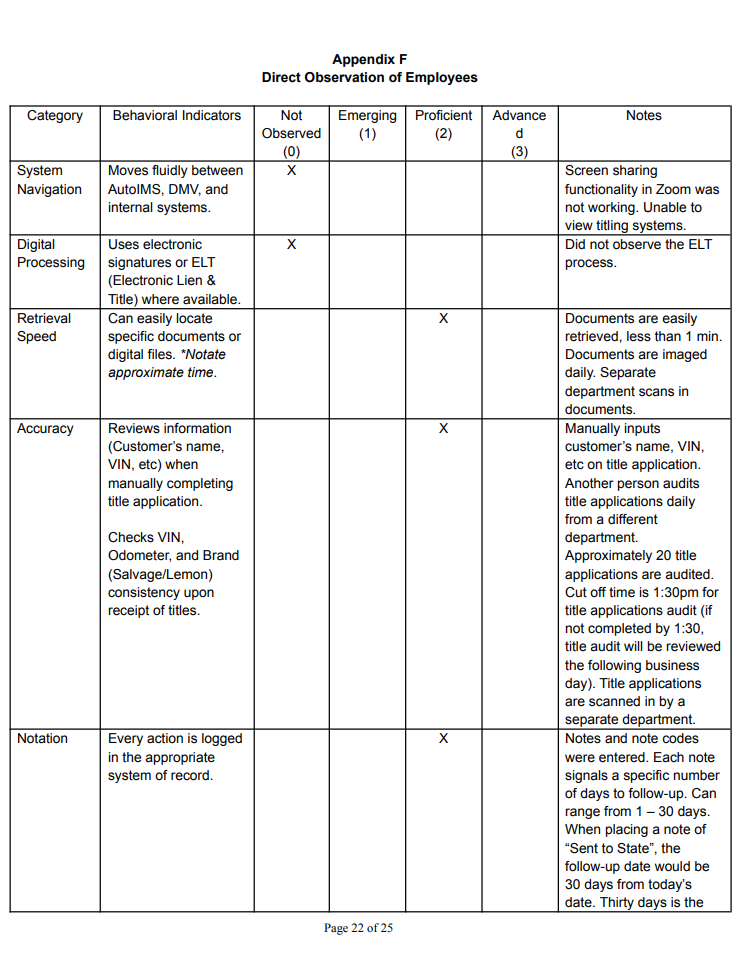
This needs assessment was created for a real auto-finance company to recommend deeper, non-instructional solutions for performance issues. The client’s needs assessment report document contained a description of our data collection methods, and the data that was collected. In order to address the performance needs, my team and I created data collection tools varying from in-person interviews to anonymous surveys and direct observations of the employees’ tasks. After interviews were conducted by a team member, I completed a thematic analysis of the results to determine key points that may have been contributing to the performance issue. The analysis was one of the vital data pieces that aided our recommendations for the client.
One of the most important aspects of this project was the chance to work hands-on with a real client and apply the skills learned about needs assessments to develop recommendations with my team. The recommendations offered were ones determined directly from information gained through our data collection methods. While there were real life struggles, like our client’s reluctance to share information in fear of their image, my team and I worked very well together to overcome these issues. Having a team that was supportive, hard working, and overall enjoyable to collaborate with made this artifact even more representative of the time and effort we put in. Despite the quick timeframe and minor difficulties we had, the artifact showcases the ability to conduct a needs assessment with selected data collection tools, offering our client recommendations based on the analysis of our data
Gap Year Preparation Course

Project Summary
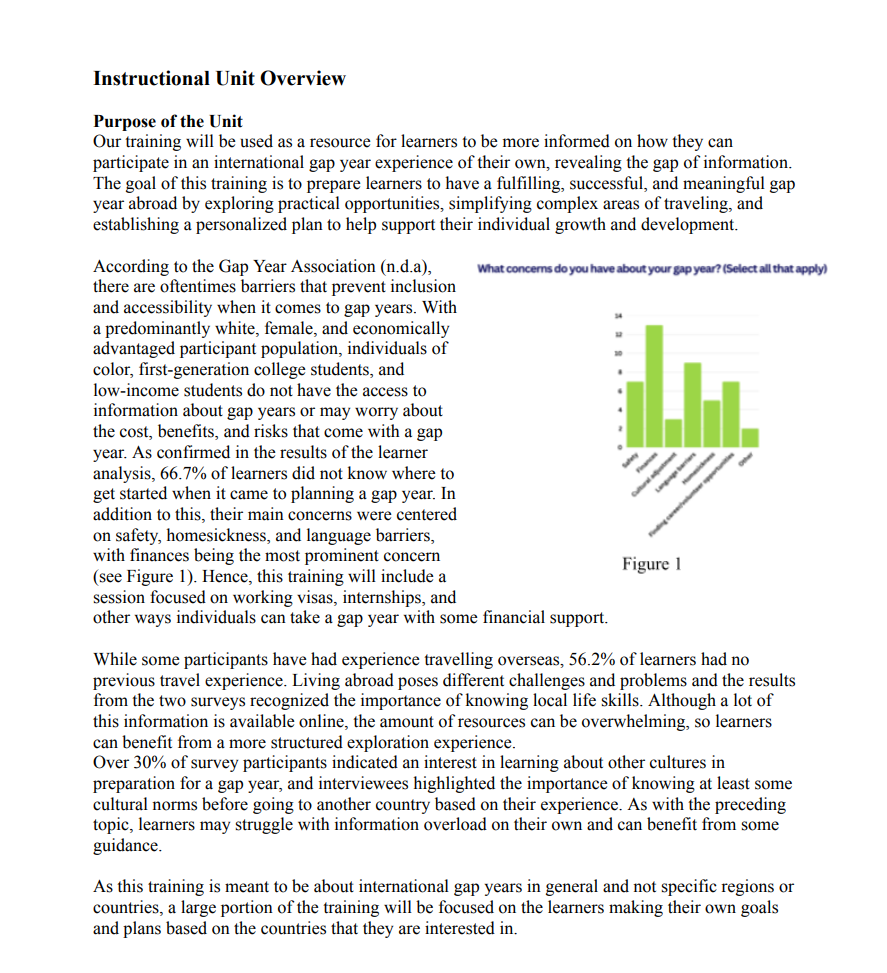
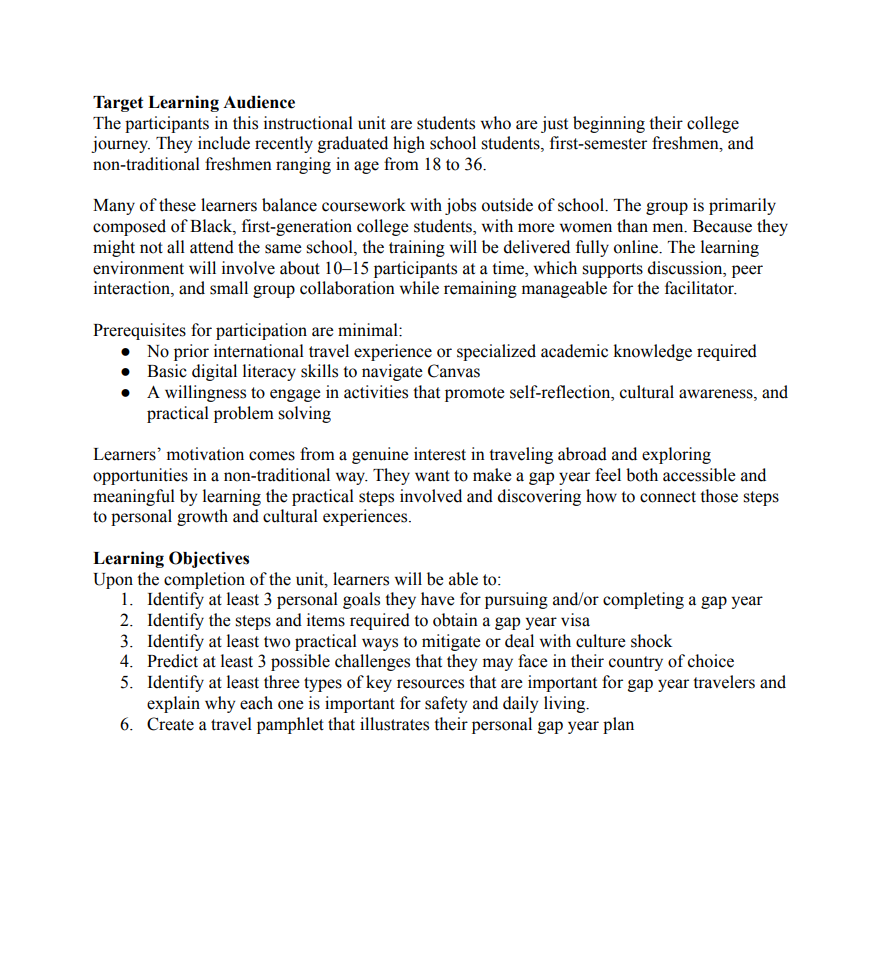
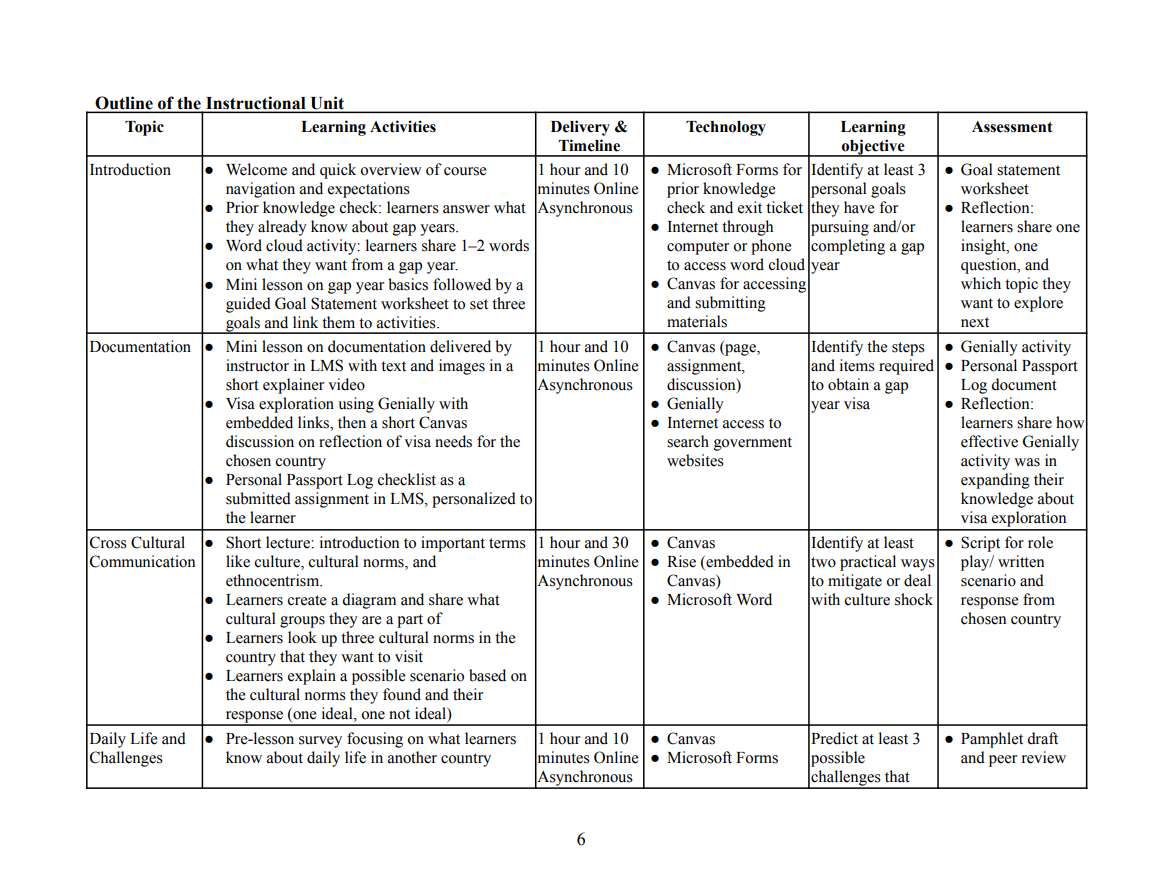
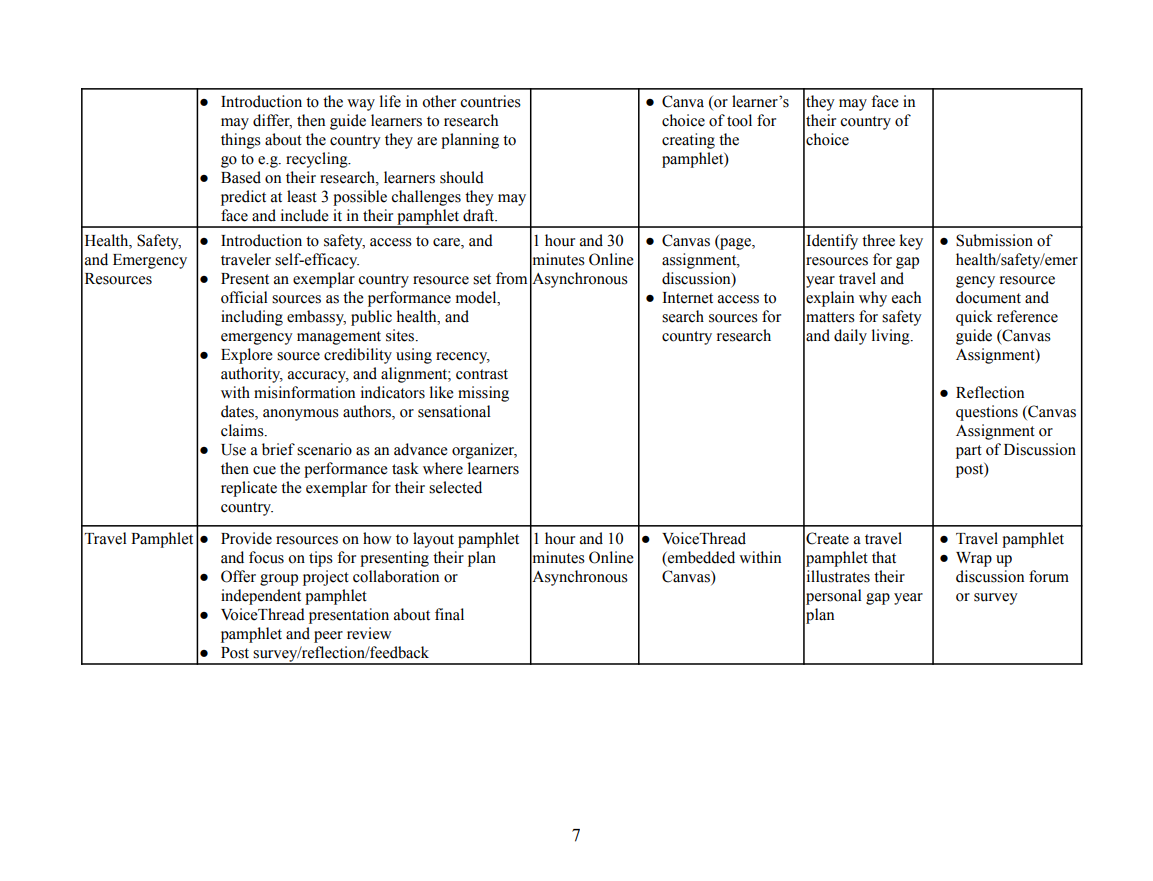
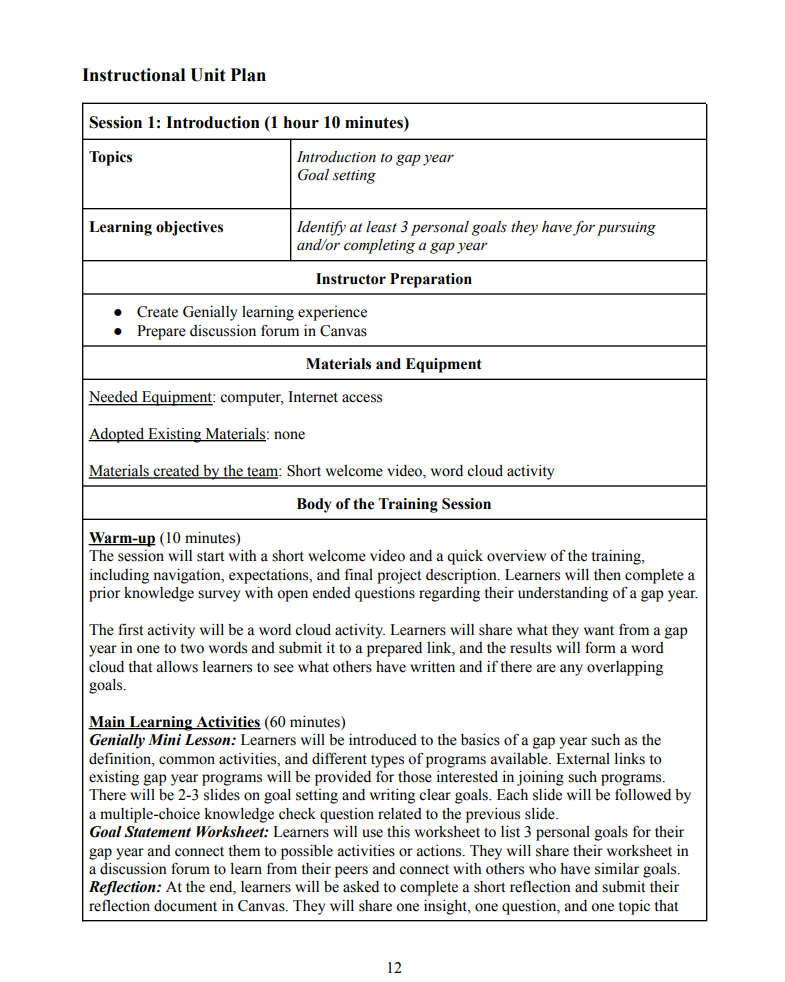
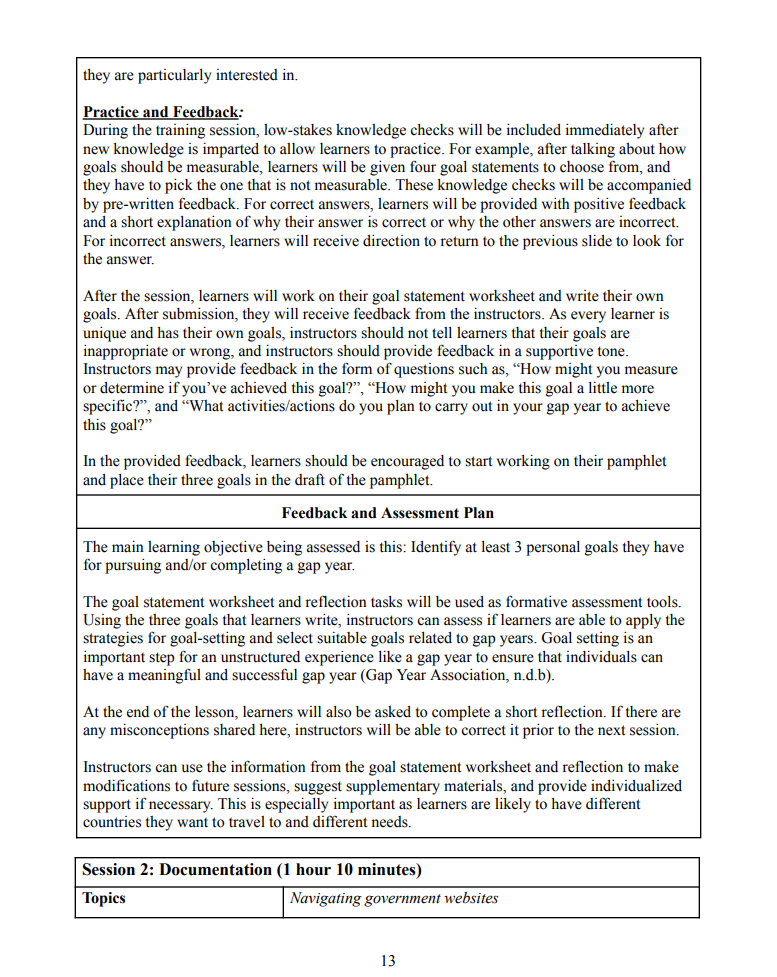
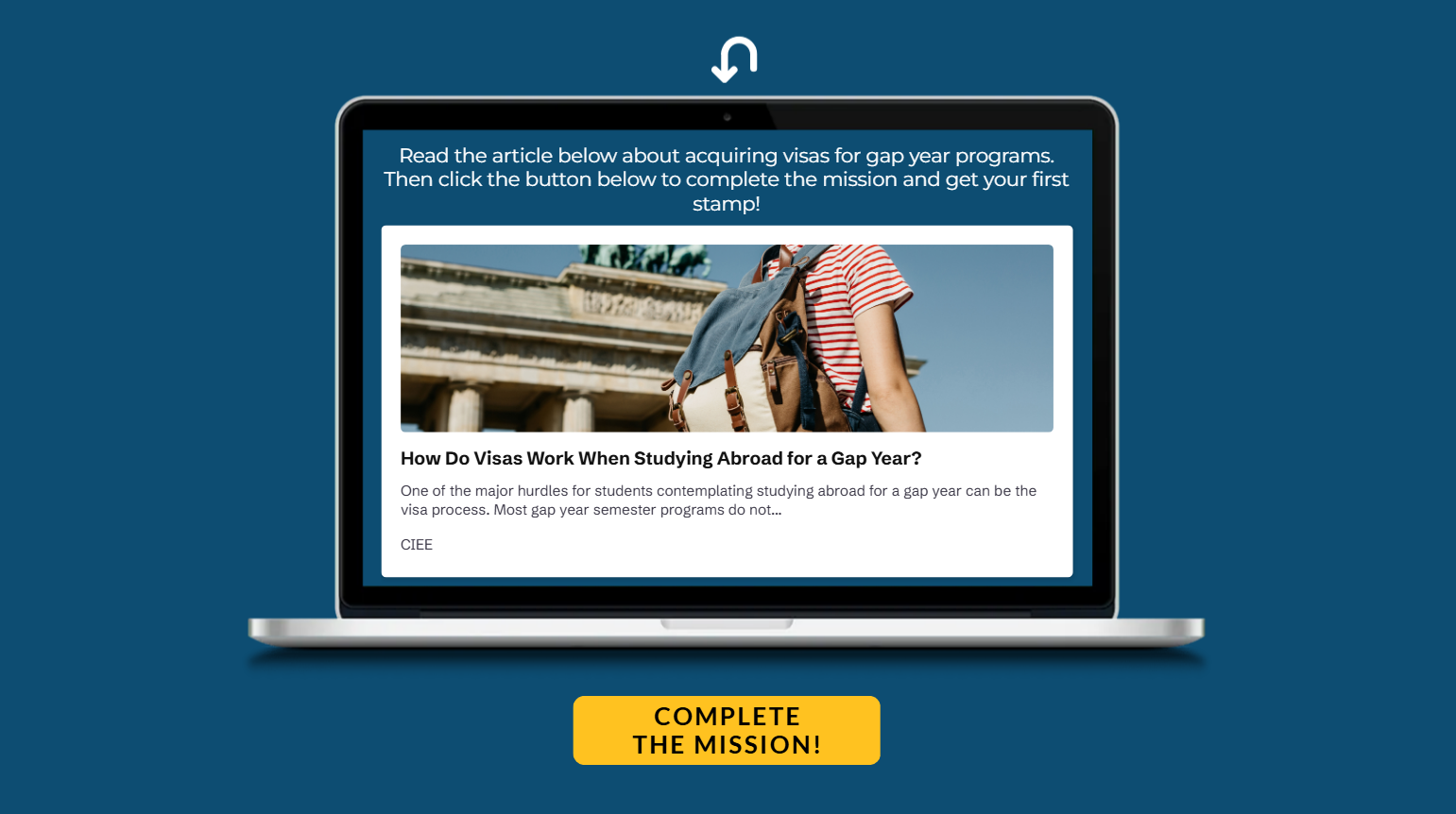
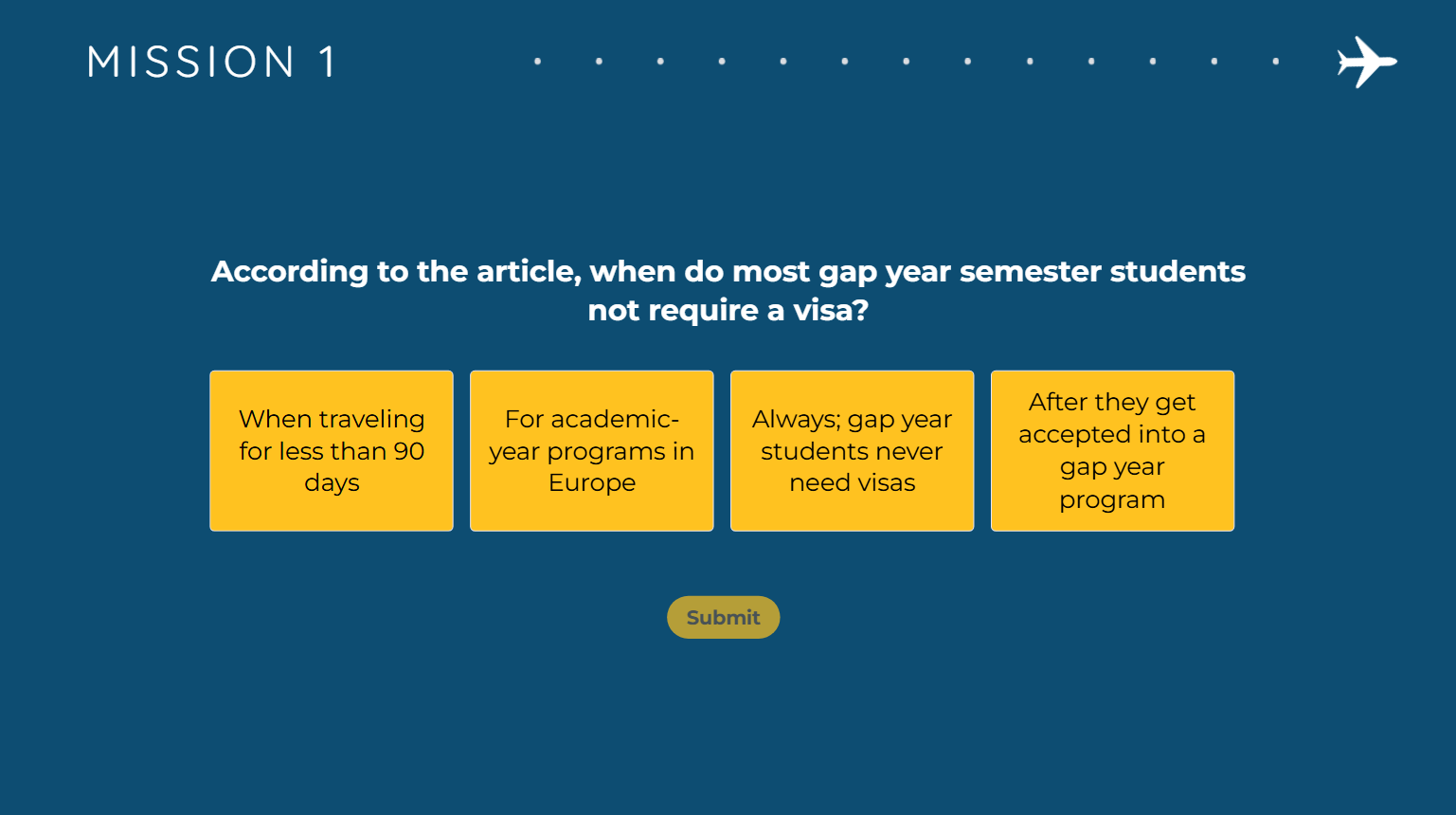
EDIT 6400E, Emerging Approaches in Teaching, Learning and Technology with Dr. Ai-Chu Elisha Ding, was one of the most influential courses on my instructional design experience within my time in the LDT program. Tasked to design and develop a 6-week course based on a topic of our choice, my group and I had to look back on our personal and professional experiences to make a decision. Due to my interest in working in higher education and my team members’ familiarity working with higher ed students to prepare them for studying abroad, we chose to develop a course that focused on helping prep university students for taking a gap year in another country. We identified and selected data collection tools in order to get more information on what aspects of planning to go abroad seemed confusing or intimidating to current university students, as well as what topic of interest they would like to know more about had they chosen to take a gap year abroad. These consisted of two anonymous surveys with current or recently graduated university students, and an informal interview with individuals who had experience taking a gap year. Having recently graduated from university, as well as knowing individuals still in school, I conducted one of the two anonymous surveys to gain information on our potential learners’ prior knowledge and interests with taking a gap year. The results from our data, after collecting and discussing as a group, helped inform the six topics we decided to focus on for the 6-week course. It also supported the development of the learning experiences implemented in the course to foster engagement and promote collaboration. I specifically designed and developed an interactive documentation activity created with the web platform Genially, which can be accessed in Session Two of our course, titled “Documentation”.