
Foundations
Bedroom Culture Brightspace Course

Project Summary
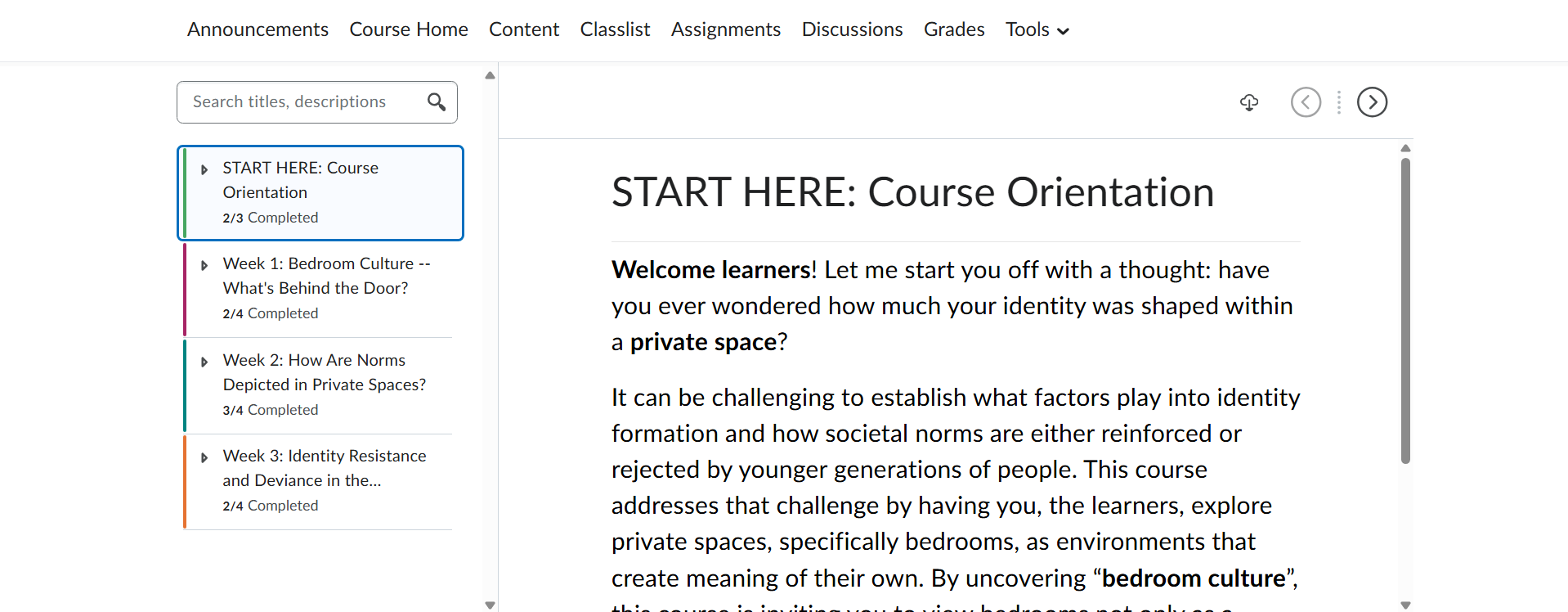
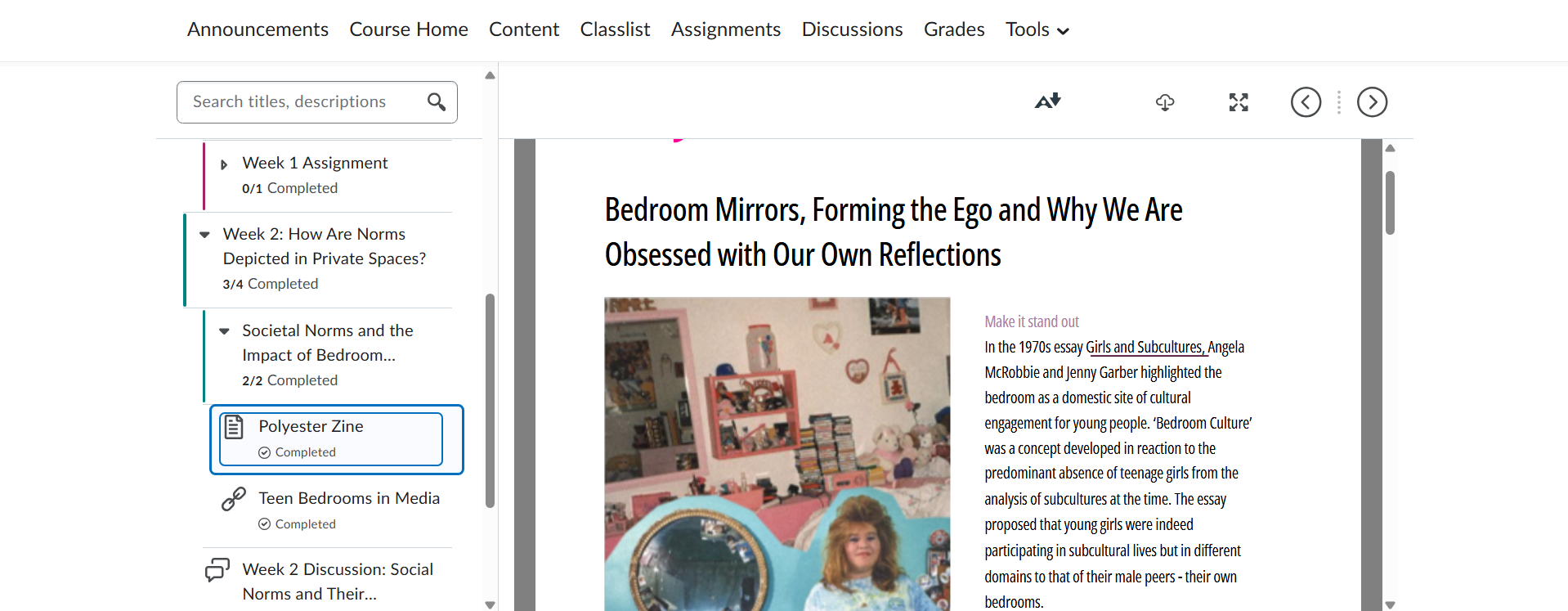
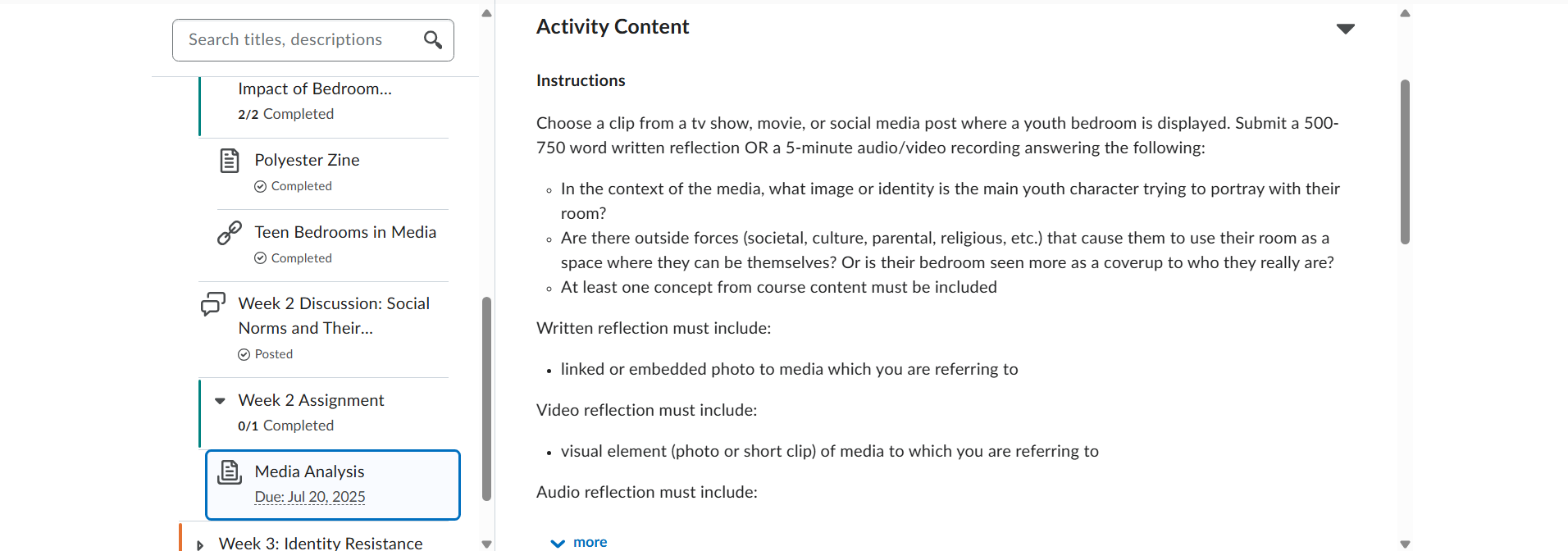
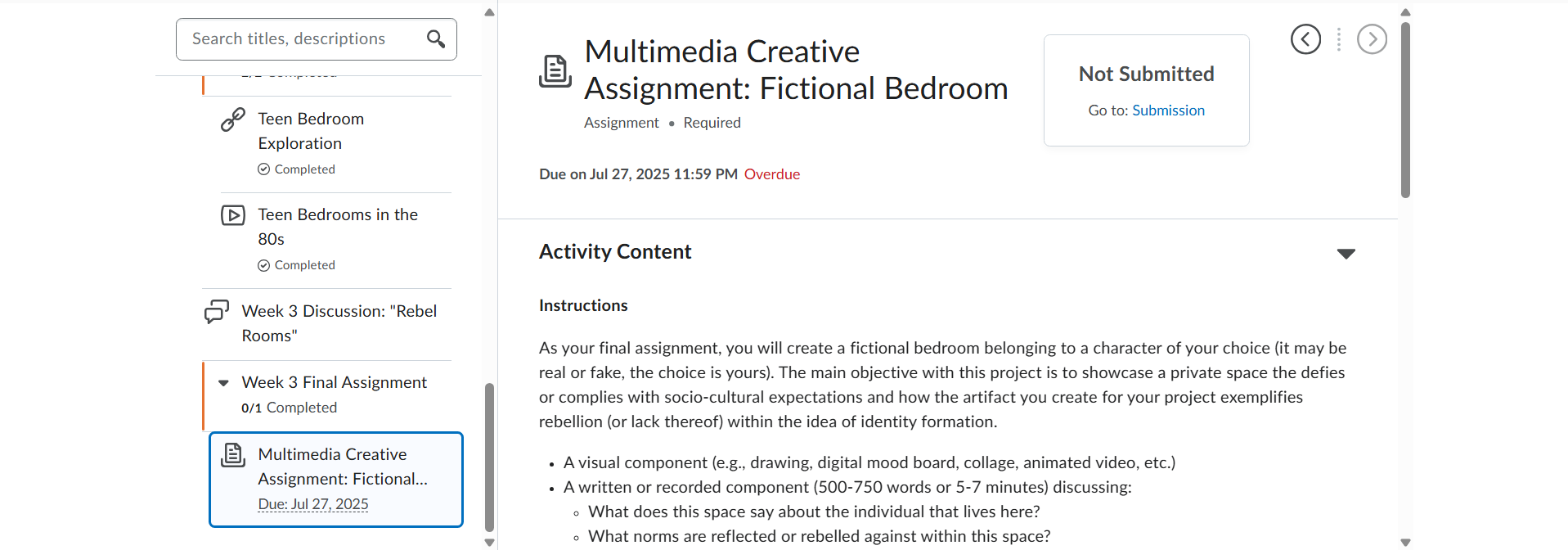
I was tasked to create an online class using Brightspace by D2L, so my background in communications and media studies made me gravitate towards building a course centered around the concept of “bedroom culture”. Bedroom culture: a phenomenon that digs deeper into how identity formation occurs in private spaces, like the bedroom.
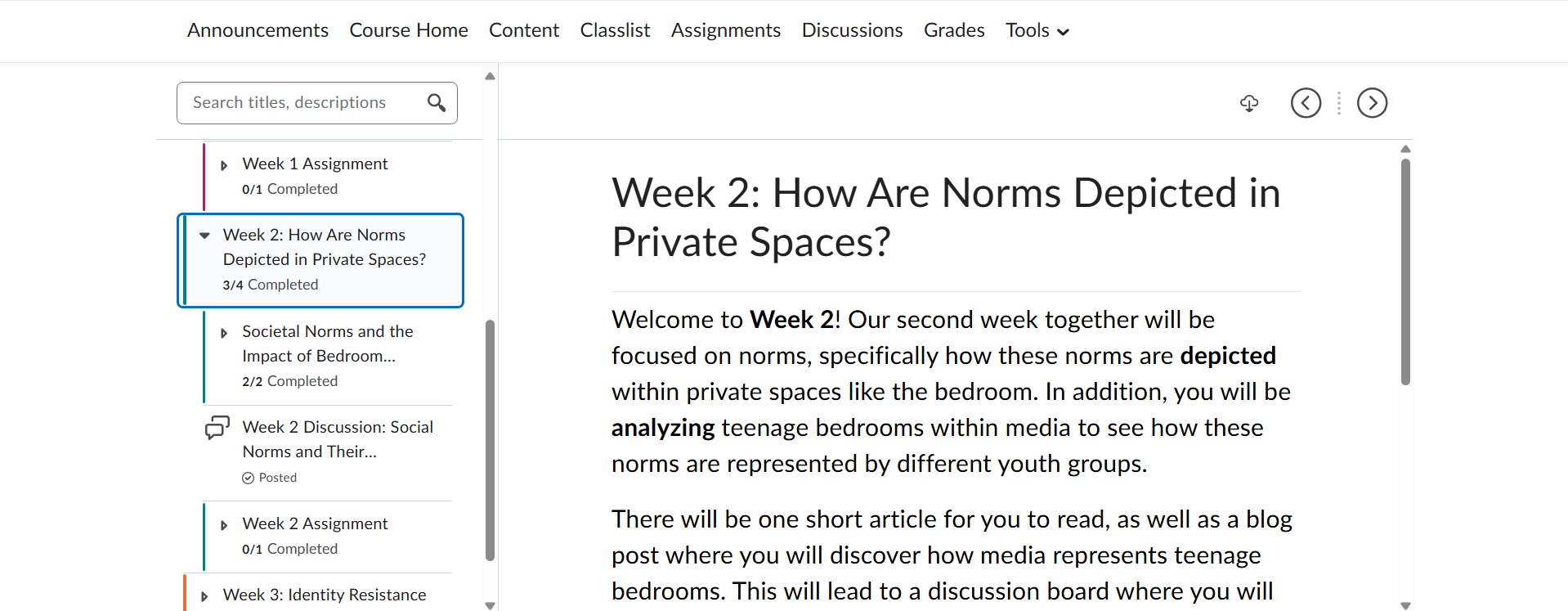
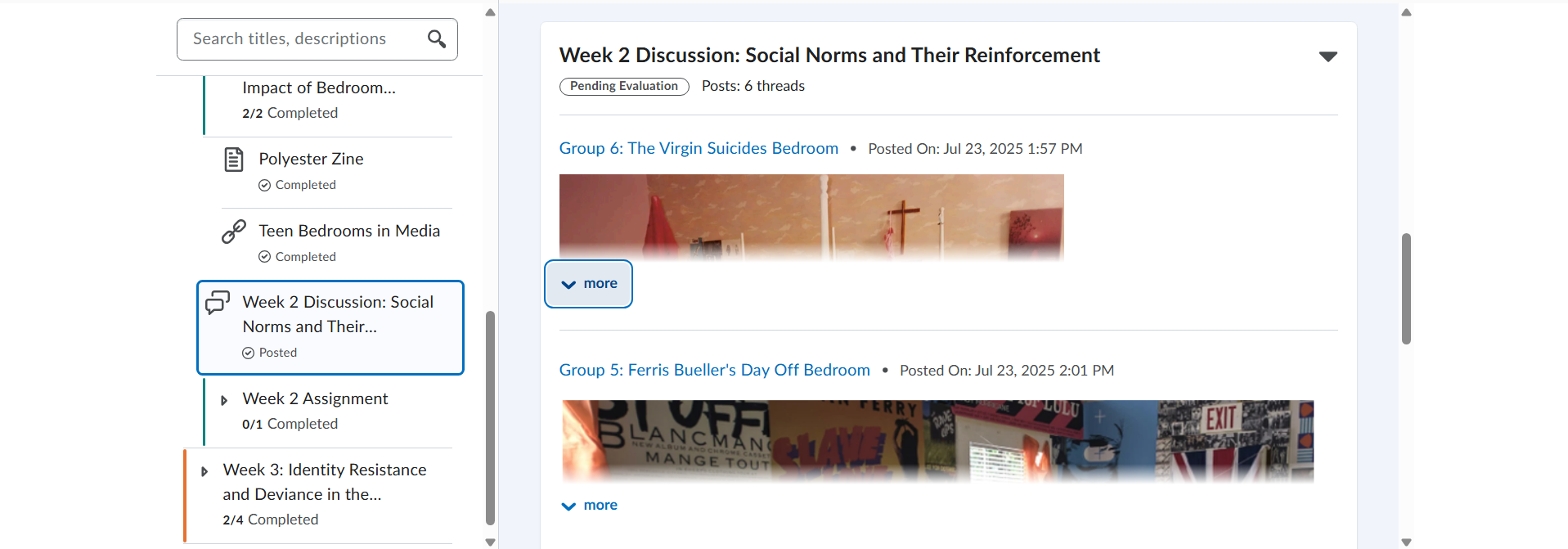
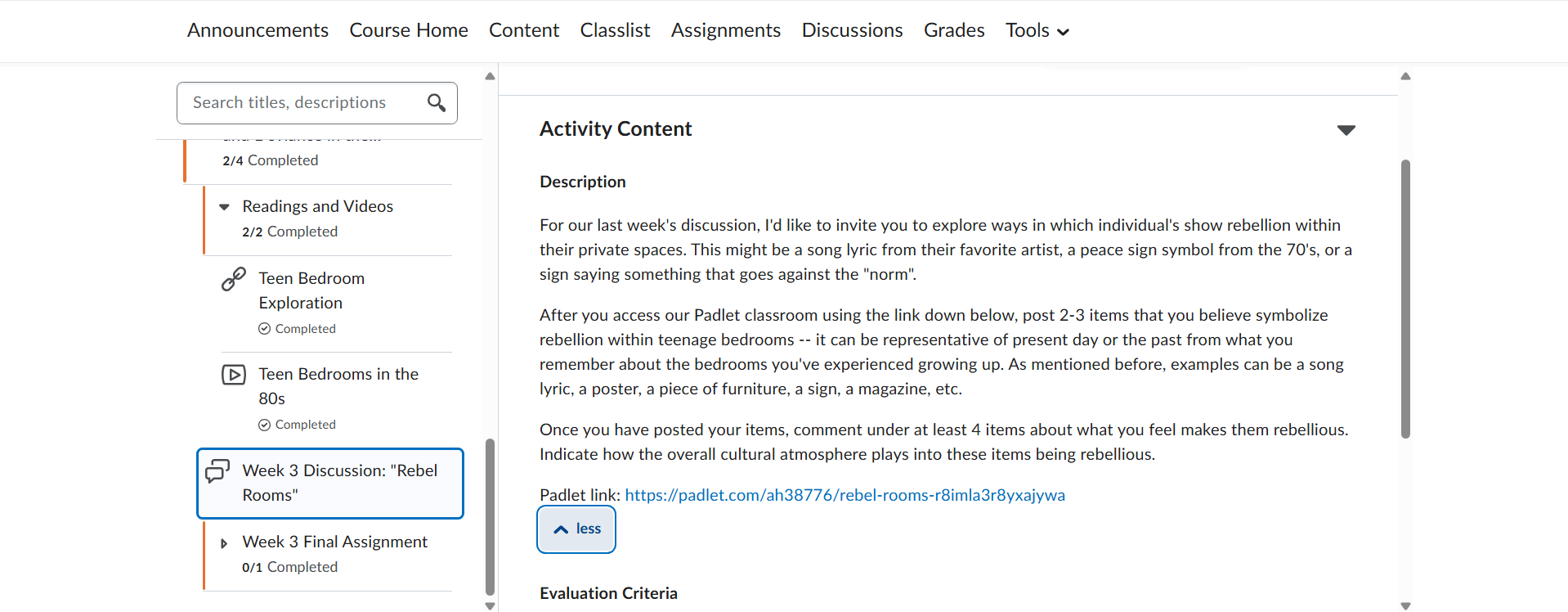
Utilizing my foundational knowledge of Bandura’s Sociocognitive Learning Theory, I put emphasis on collaborative learning in this course by creating spaces where students can virtually discuss and share their perspectives on weekly topics. The weekly discussion boards served as a virtual “classroom”, allowing students to publicize their perspectives on readings, activities, or upcoming assignments. Additionally, weekly discussions are not always in the same format: week one discussion correlates with readings of that week, while week two focuses on students working in smaller groups to analyze different images of teenage bedrooms in media. Thus the differentiation of design in weekly discussion boards allows the virtual classroom to mimic that of the physical classroom space where students are exposed to different approaches, yet leave the space with the same valuable information.
Furthermore, collaboration in this online course design was a key component for me in development. Virtual learning can oftentimes feel isolating or daunting, especially in a space where personal, reflective practices are an essential part of most assignments assigned online. Due to this, the inclusion of various different formats of collaboration offered each varying learner the opportunity to choose which form of discussion feels the most effective for them in their reflections. For one student that may mean voicing their opinions first and then reading others perspectives on the discussion board after. For another student, it may mean virtually meeting with their group to have a conversation about their perspectives before concluding their assignment. All in all, effective collaboration is key for the transfer of knowledge, and what I aimed to have achieved in the final product of my online class.
Augmented Reality as a Supportive Tool
Project Summary
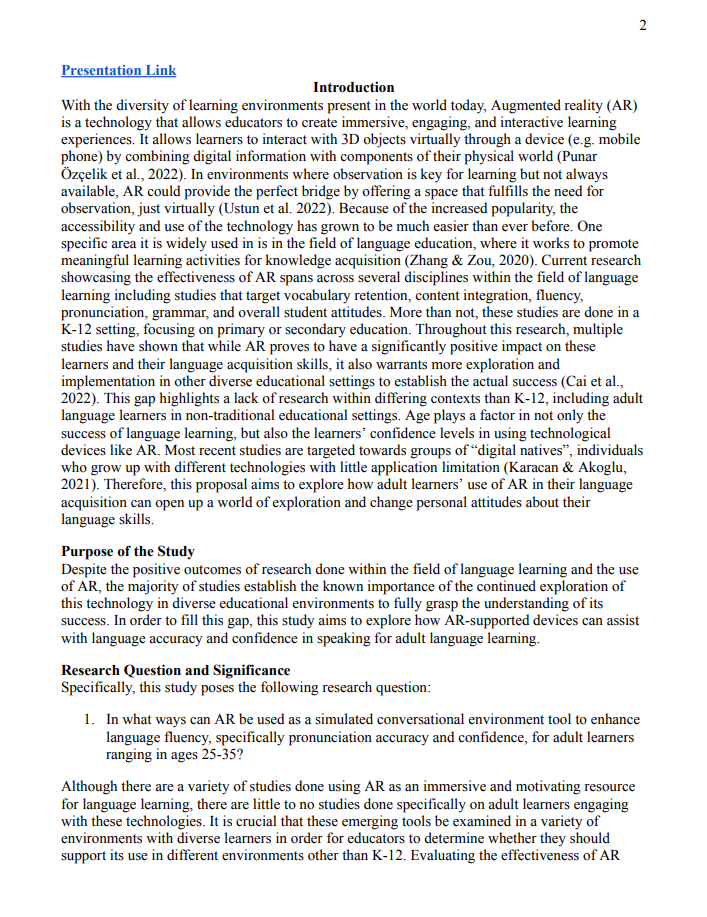
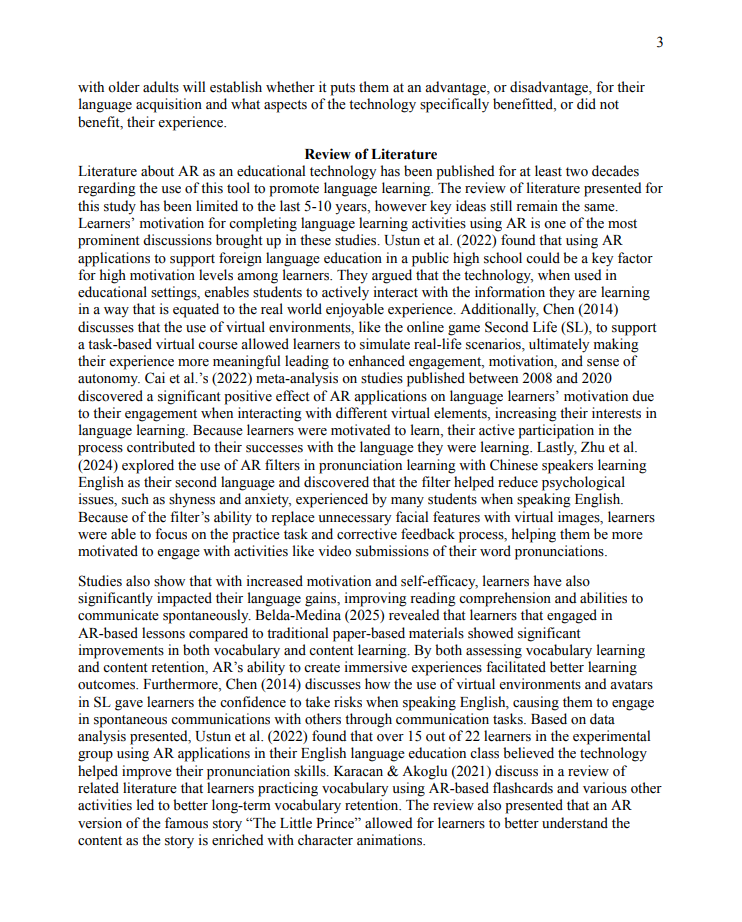
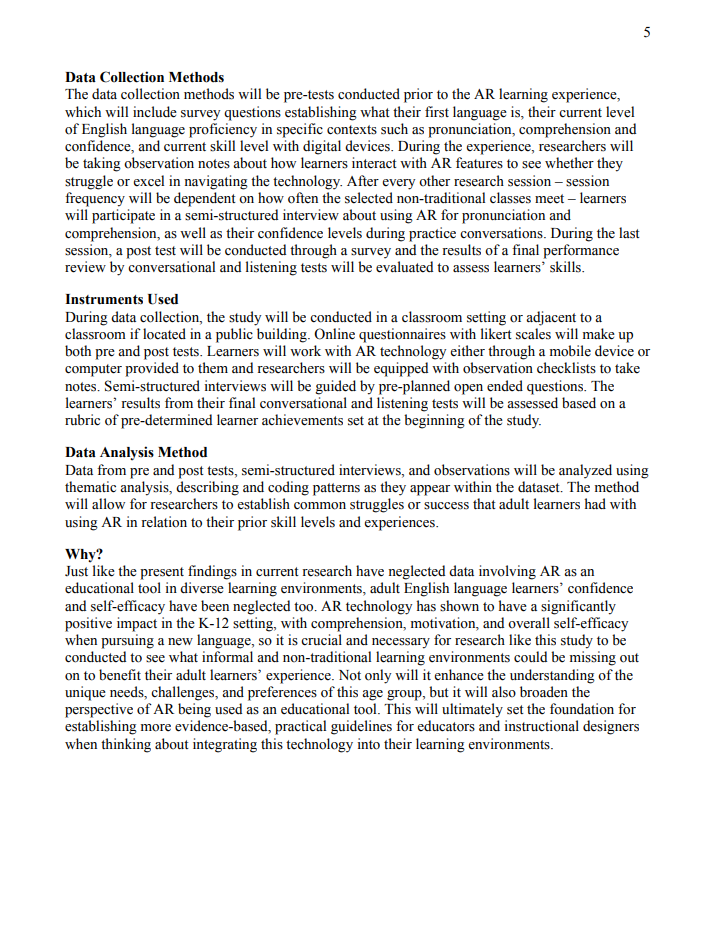
Within the foundations of instructional design is the ability to recognize and evaluate emerging approaches as it applies to teaching, learning, and technology. I researched and offered a framework for conducting a study on the ways in which augmented reality (AR) could enhance and help build language skills for adult learners. Growing up in a family that spoke two languages, I wondered what the experience was like for older adults trying to learn a completely new language, and how AR could provide assistance in that journey by being a simulated conversational tool. Prior to this course, the extent to which AR had been used as an instructional tool was unknown to me. I specifically wanted to uncover whether adult language learners were considered as a potential learning audience for using technologies like augmented reality or discovering the reason for their exclusion if they were not.
The results of my research revealed that the use of AR as an instructional tool was prominent in K-12 settings but lacked for older adults learners in informal or non-traditional educational settings. Due to AR’s rise in language education, researching its benefits for more dominant groups was a critical aspect for me to establish whether or not it could be beneficial for other types of learners as well. The lack of data proved how often adult learners are neglected when it comes to using complex instructional technology tools, like augmented or virtual reality, and how both educators and instructional designers could benefit from more research on a form of teaching that could make a breakthrough in adult learning environments. Although I was not able to conduct my study and provide plausible results for the previously proposed question, I feel as though my research uncovered something even more important: the crucial learning gap present for adult learners in informal and non-traditional learning environments.