
Let’s start at the top…
During my adolescence, I was under the impression that the skill of learning eventually grew stagnant after obtaining a college degree, then, (hopefully), a job. In my mind, I was meant to: go to school, get good grades, graduate, start a career, and then life would begin. Unfortunately for me, I realized soon after graduating with my BA that I did not want to stop learning. Prior to graduating high school, I viewed my education as a place of endless opportunities to learn new information before time ran out. I pushed myself to do well in almost every subject (not including calculus).
Due to this, when I was in my junior year of high school and had to choose which university I wanted to attend and my major, I felt lost: I had gone in every which way and was a “well-rounded” student, but where did my passion lie? Did I like learning about DNA and molecules to the point where I wanted to become a biologist? Not really. Was reading every book in the English literary canon sparking my joy to publish my own work? Not so much. I had interest school and strived to do well in my classes, but it never felt like my passion laid wholeheartedly, outweighing one over the other.

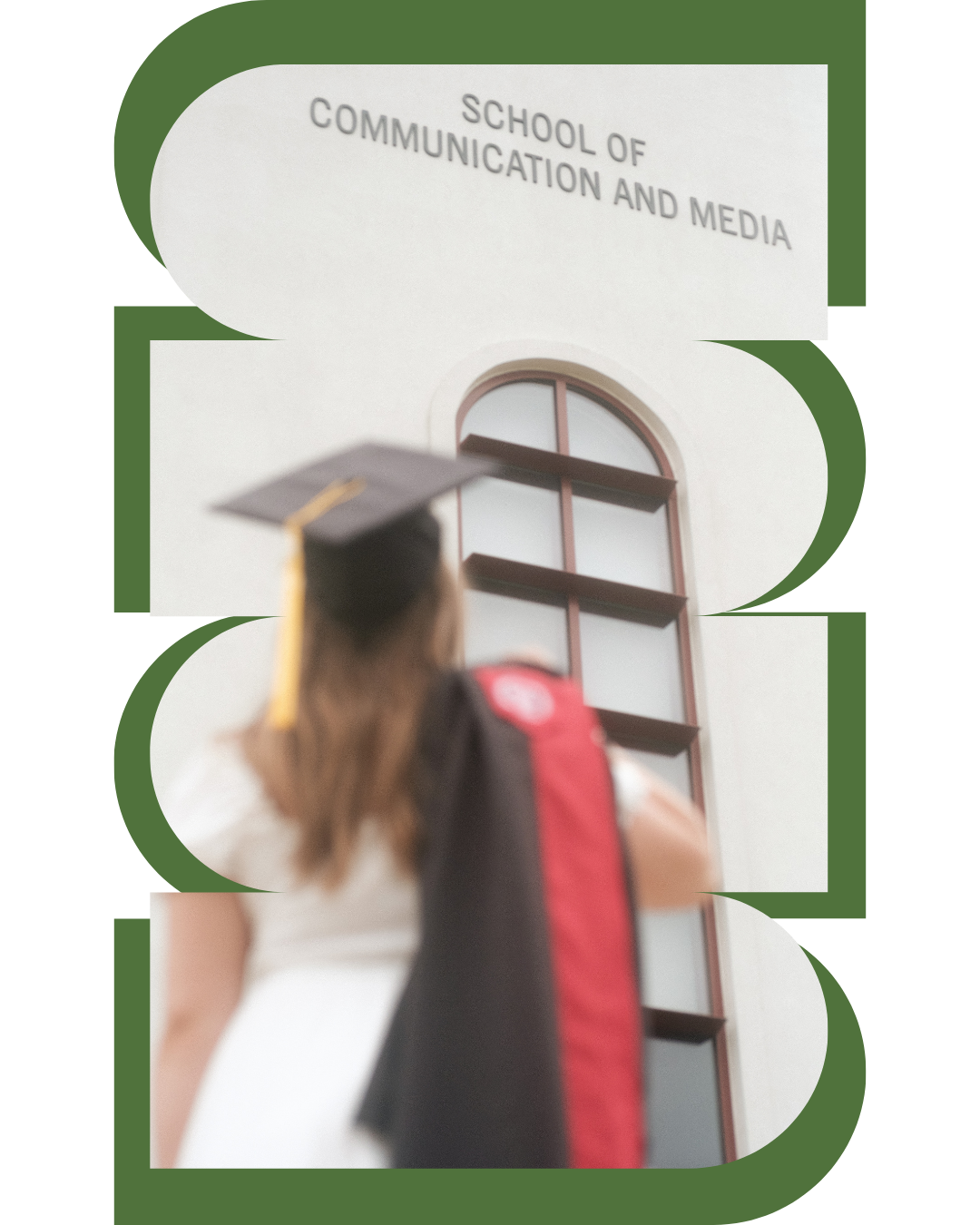
One thing I knew for certain was that helping others see the interest or understanding I had for each subject when they needed help felt good.
It felt fulfilling. It felt true to me.
To no surprise to my family or myself, as someone who wanted to help others, I turned to Elementary Education (though this did not last long). Teaching felt natural to me, it ignited hope that maybe I can make a real difference with my abilities. I never doubted my love to learn, even if it meant learning a little bit of everything. However, life has an interesting way of making you turn left when you were supposed to go right. The right was bright with a clear light at the end of the tunnel and the left was dark, ambiguous, but it seemed more exciting and different from anything I could have imagined for myself.
That turning point in my life is when I decided to change my major to Communications and Media Studies, in hopes of becoming a world-famous movie producer and having my name stand out in Hollywood one day. This dream erupted in my senior year of high school after becoming the editor of my school’s online newspaper, but was cut short due to COVID-19 pandemic. However, my love for media and video production never died. It only burrowed itself away in my thoughts until my sophomore year of college when I realized that this was the time to explore my passion and ignore the safe option, so I gave myself the opportunity to do just that.
Although, my dream of being a movie producer died shortly after I encountered how critical film majors are when discussing how the movie that made me fall in love with filmmaking, La La Land, was a romantic musical film, therefore making it not serious enough for someone to want to pursue filmmaking. However, good came from that experience. That day forward I vowed to let myself explore the more nuanced side of media and its relationship with society and culture. Subsequently, I began researching the intricacies of how media for centuries has been used as a pertinent voice for political, social, and cultural movements – all because it has the capacity to teach people. It teaches individuals about different beliefs, current events, and how to explore outside the bubble of their environments.
As technology boomed and the need for people to have the necessary skill of digital media literacy grew, my studies allowed me to see a deeper side of communications rather than only viewing it in the lens of marketing, advertising, and film and media. During my last semester of my undergraduate career, I took the leap and delve into the world of educational media and technologies by applying for an opportunity to work with the Holocaust, Genocide and Human Rights Education Project at Montclair State University. The internship gave me the chance to survey a pressing human rights issue, and design and deliver a corresponding lesson to students in grades 9-12 at a local public New Jersey high school. Since changing my major from education to communications, this experience was the first taste I had of creating a lesson plan and incorporating engaging, interactive, and reflective activities for students to truly grasp the complexities of the chosen human rights issue – and luckily, it did not stop there.
Graduating college and not having any school work to do was relieving at first, but it left me feeling stagnant.
I thought that my need for learning would finally stop when I graduated, but I increasingly grew to crave the freedom I felt when I was acquiring new information or refining a skill that I already had. Additionally, I was not fully convinced of the direction I wanted to go with for my career, so I took the initiative to try to discover where I did want to go with it. When I thought about my internship experience, it led me to conclude how powerful educational technologies can be to engage and teach individuals, which encouraged me to research my options.
This discovery is what led me to the University of Georgia’s Design, Learning, and Technology M.Ed program. I had finally found the perfect intersection between the love I had for my communications degree and its exploration of media, and that innate passion for wanting to help others through education and teaching. I gave myself the opportunity to explore this interest just as I had vowed to myself during my undergraduate degree, inspired by the possibility of all the new skills I could learn. Establishing the knowledge of how to create effective, engaging, and interactive learning experiences by getting more experience with evidence-based practices is what I came into the program to achieve, but what I came out with was so much more.
I worked on projects that introduced and developed my skills in softwares like Articulate 360, Camtasia, Vyond, and ElevenLabs. I went from creating a fully fleshed course from my own idea in Articulate Storyline, to working with stakeholders for UGA Extension to assist in reformatting an already existing course into a condensed and captivating Articulate Rise course. These projects were backed by my foundational instructional design skills learned early on in the program like the ADDIE process, as well as learning theories like Mayer’s 12 Principles of Multimedia Learning and Sociocognitive Learning Theory. Additionally my journey as an LDT student lit the path to learn more about human performance technology and its relationship to instructional design, revealing the correlation between designing a solution by understanding the deeper context of a performance issue. Discovering more about HPT opened my eyes to exploring both instructional and non-instructional interventions for organizations, which was proven helpful when conducting a needs assessment for the first time.
Not only did the LDT program offer so much growth through coursework, but it also led to me working alongside the Learning, Design, and Innovation team at the American Society of Addiction Medicine as an Instructional Design Intern. During my time there, I was given the ability to sharpen my skills in video and audio editing, presentation and infographic design, and course creation. I was lucky enough to collaborate with several members of the LDI team, finalizing my experience by working with my supervisor to curate a 5 module “Podcast Workflow” course which will be implemented in onboarding for future interns. The entirety of this experience felt like the culmination of all the hard work and skills I gained, shaped, and refined from the LDT program being put into action.
I knew that if I wanted the chance to push my career forward to create the future I wanted, I needed to dive head first into the field of instructional design even if it was scary – and that’s exactly what I did.
In the year and a half that I completed the program, I found myself working on several projects that made me say “I cannot believe I am able to create and develop this kind of learning”. As a lifelong learner, I can say this program has taught me to create my work like I am in my learner’s shoes. For a learning environment to be effective, it needs to resonate with those who are engaging with it so that it can leave a lasting impression. The beautiful and oftentimes difficult, but rewarding, aspect of instructional design is one that I never realized I needed all along: a career where learning never stops. No longer do I need to fear the feeling of being stagnant because the field constantly evolves with the change in technology. And with that comes the opportunity to always learn something new, refreshing, exciting, or just the tool you need to add a bit of engagement to your learning environments. From my start as a confused, “well-rounded” student to my current status as a passionate instructional designer, I can say that I have come to realize that learning never stops, but instead evolves into new experiences that present opportunities to refine my skills and feed my curiosity.