
Evaluation
E-Com Group Evaluation and Analysis Plan
Project Summary
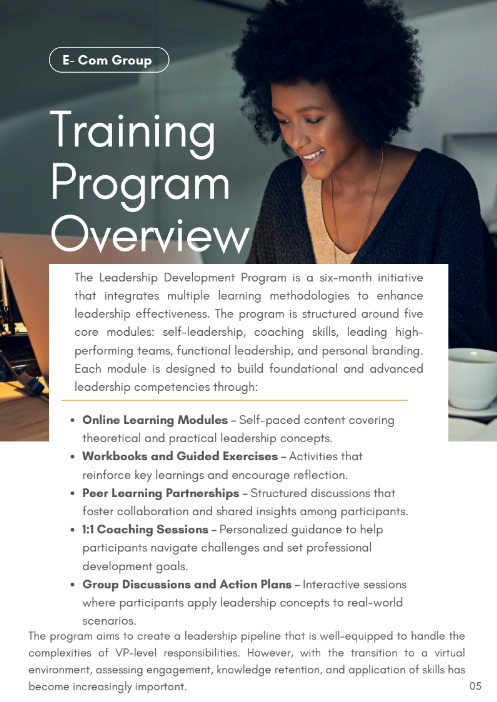
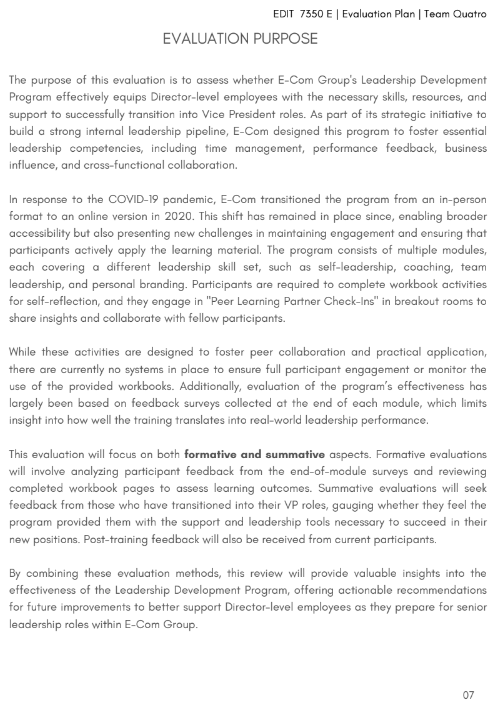
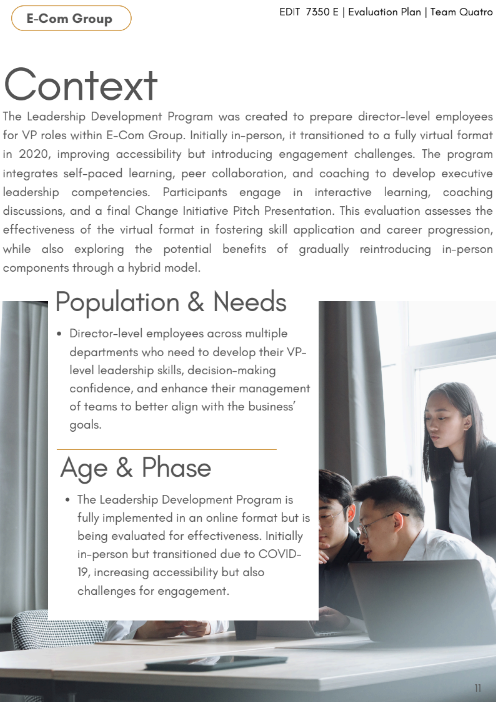
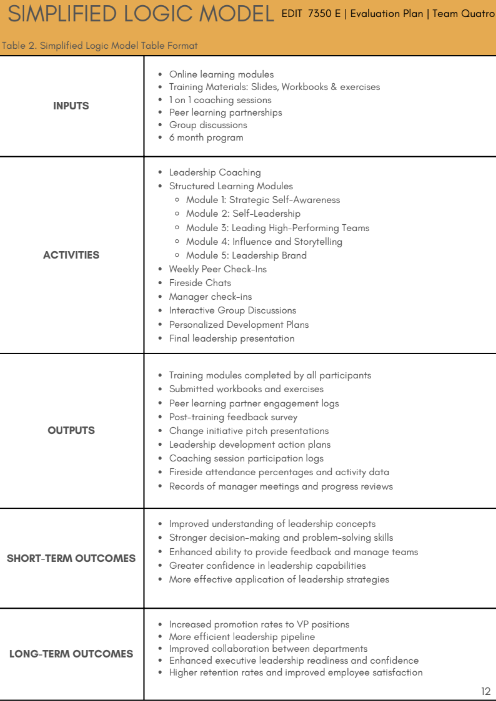
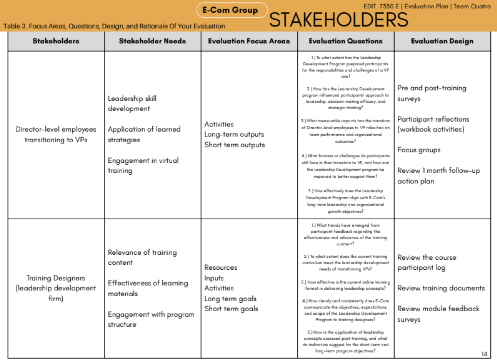
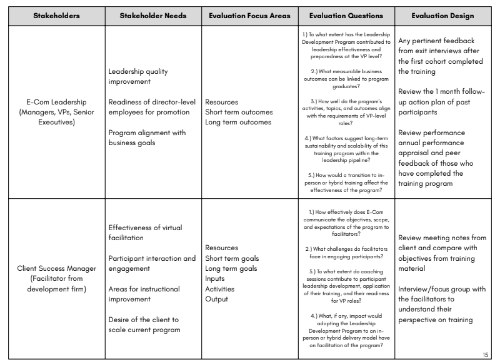
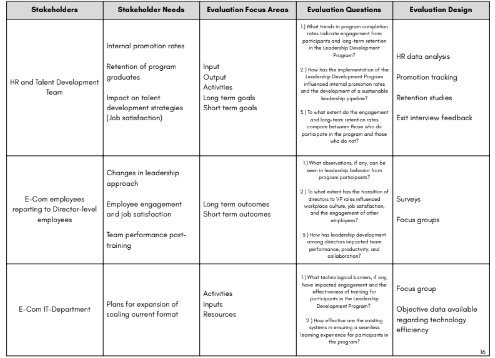
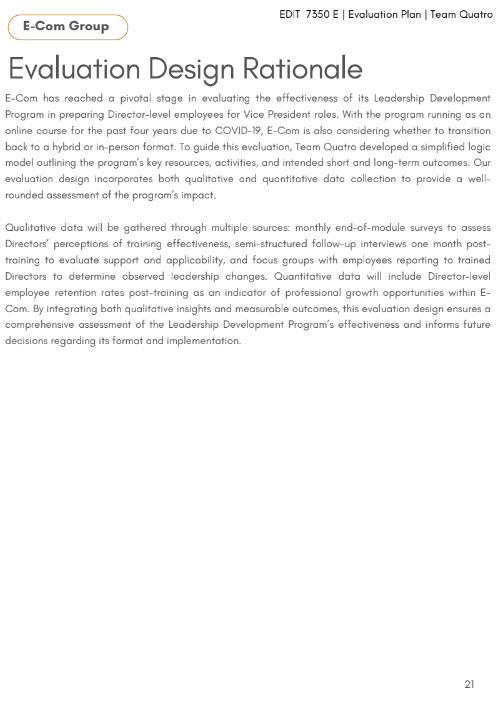
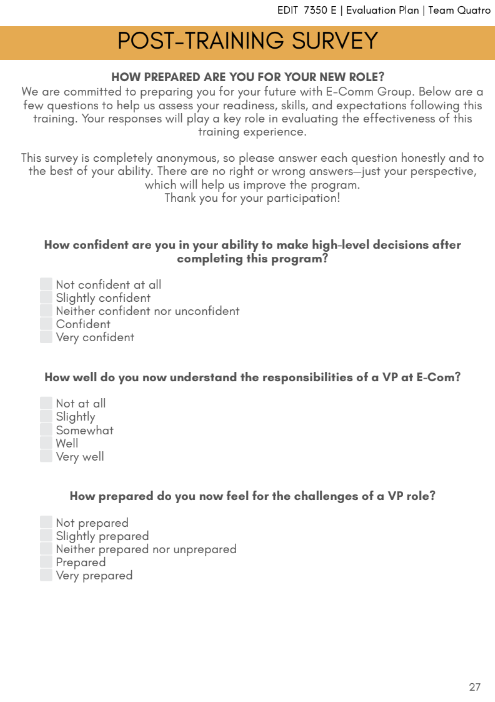
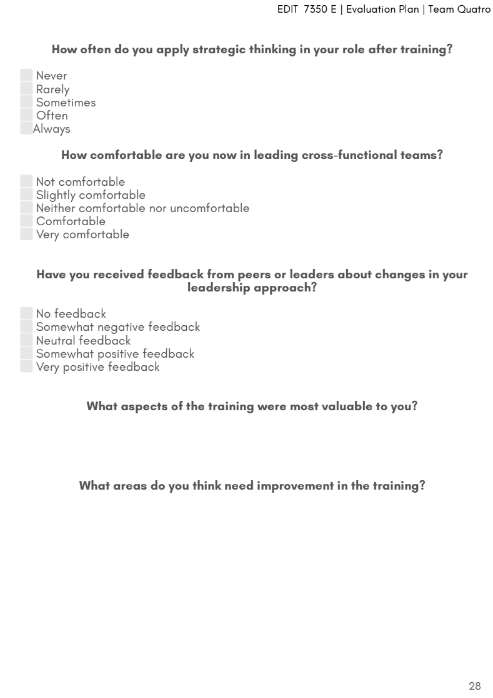
The evaluation plan proposed by my team and I was produced as a framework for evaluating the effectiveness of an implemented leadership development program at a company. The plan suggested both formative and summative evaluative tools, including survey feedback analysis, review of completed workbook activities to assess learning objectives, and obtaining feedback from those in VP positions that transitioned after taking part in the program. Prior to creating the plan, we worked on a simplified logic model to guide our decision-making process for evaluation to outline the company’s key resources, program activities, and intended long and short term outcomes. From that model we were able to determine and develop four evaluation tools that could be used to establish the effectiveness of the leadership development program. Due to the development program being focused on employees transitioning into a VP position at the company, we chose to gather pre and post survey feedback, and protocol for conducting focus groups, from those individuals. Evaluating program effectiveness is a critical step in the long-term success of any educational program. Although we were not able to conduct the actual evaluation of the leadership development program, our evaluation plan sets up the framework and the backbone for future evaluations to occur, specifying what types of data should be collected in order to inform what happens to the program moving forward.
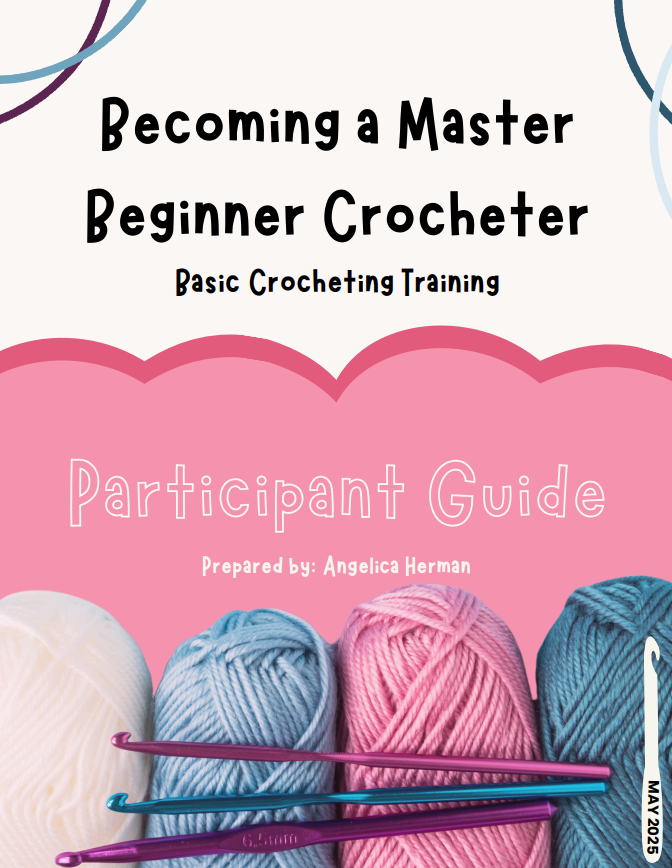
How to Become a Master Beginner Crocheter Training


Project Summary
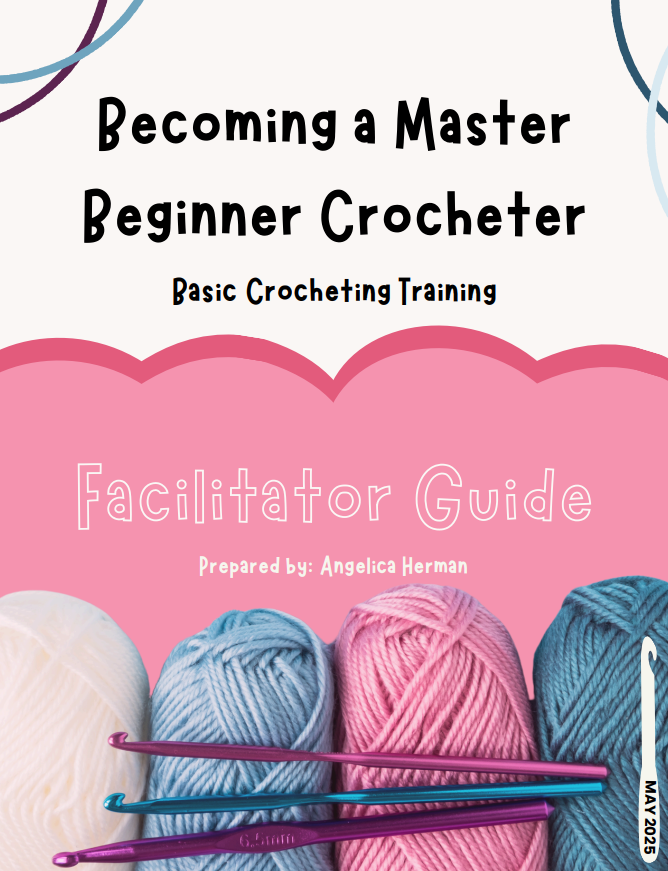
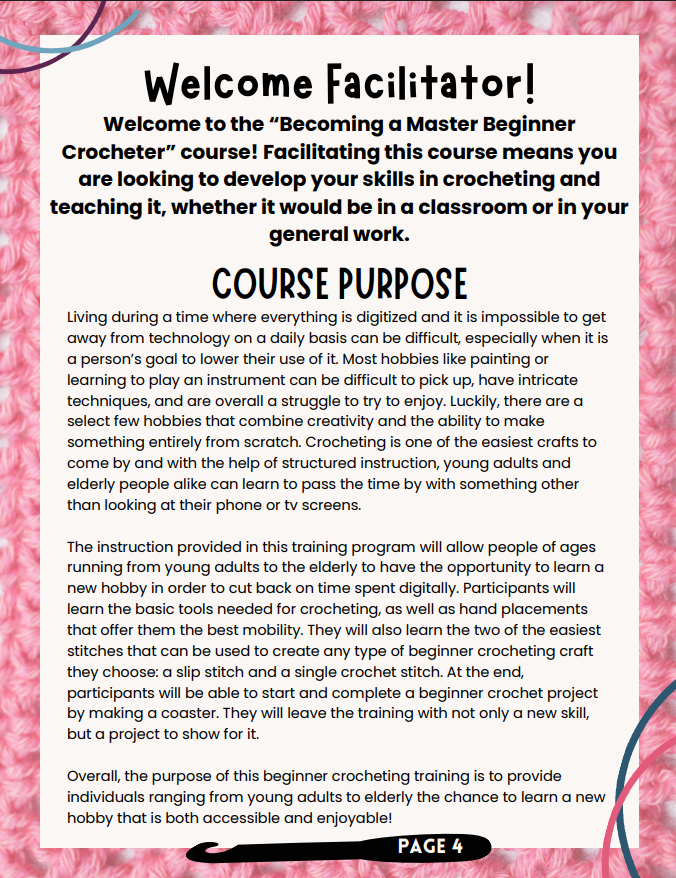
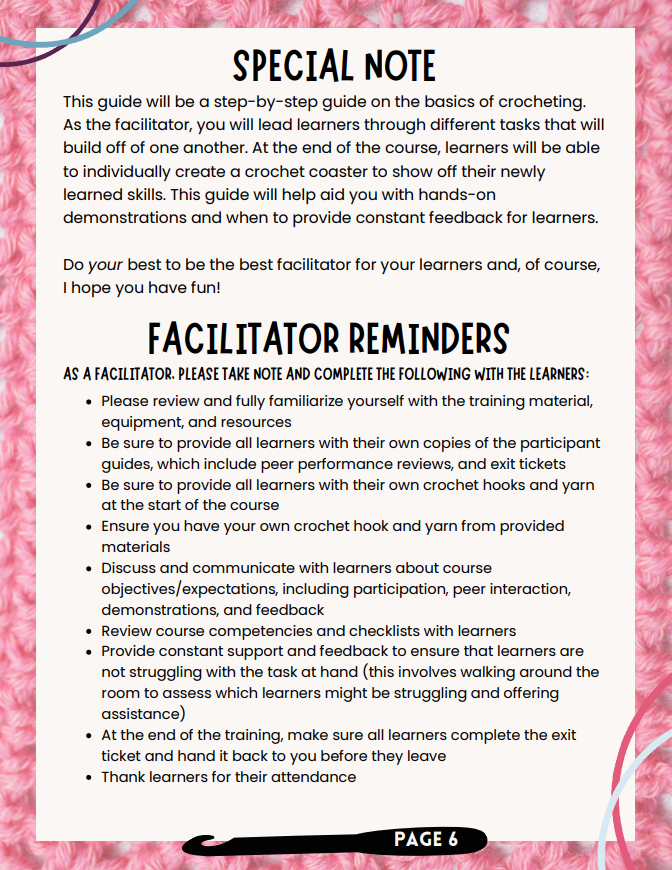
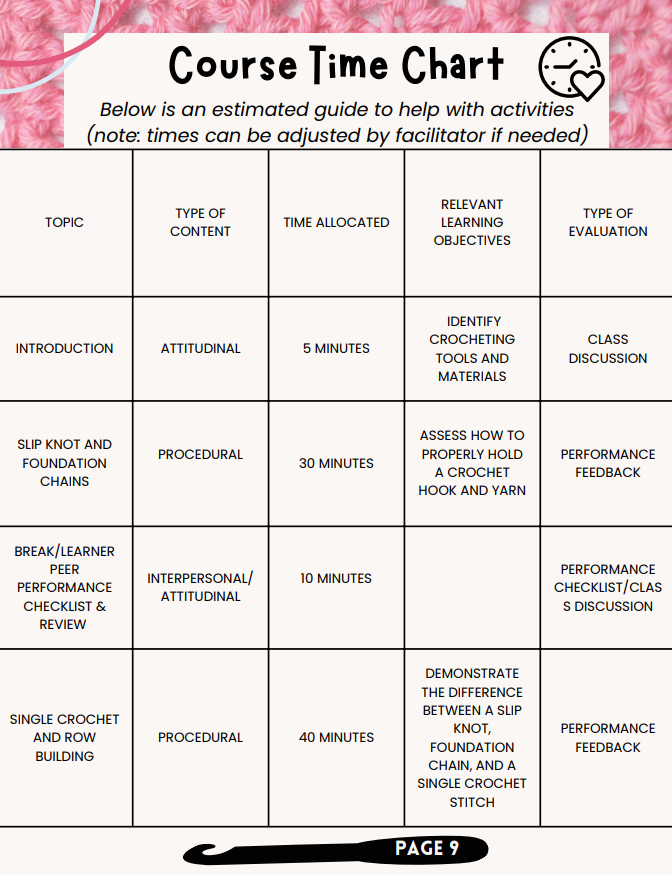
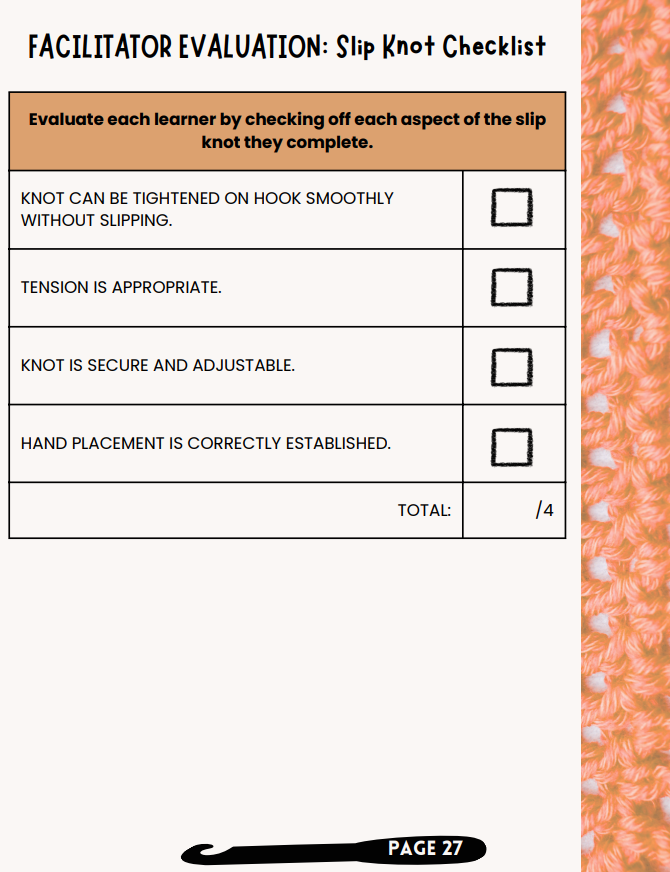
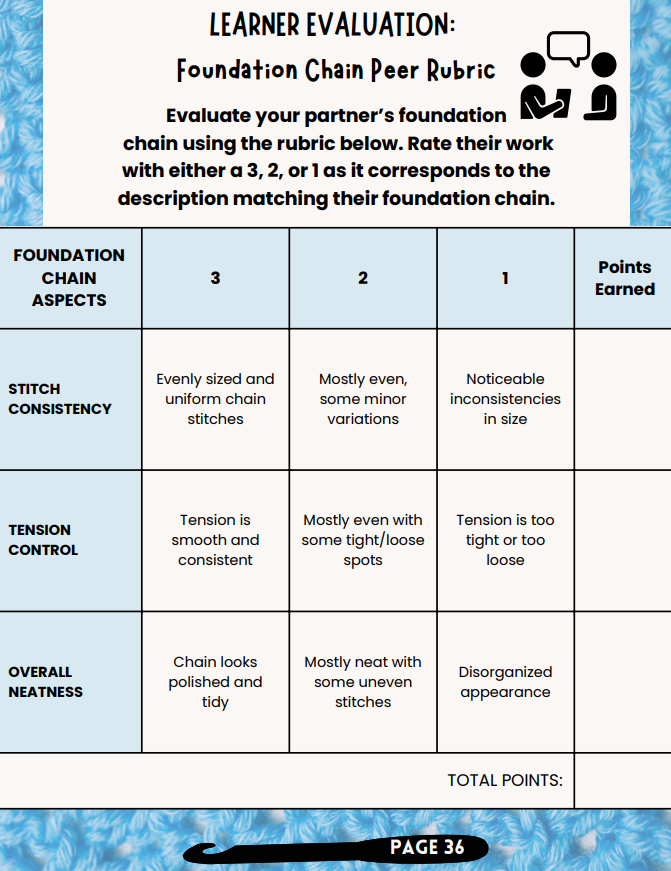
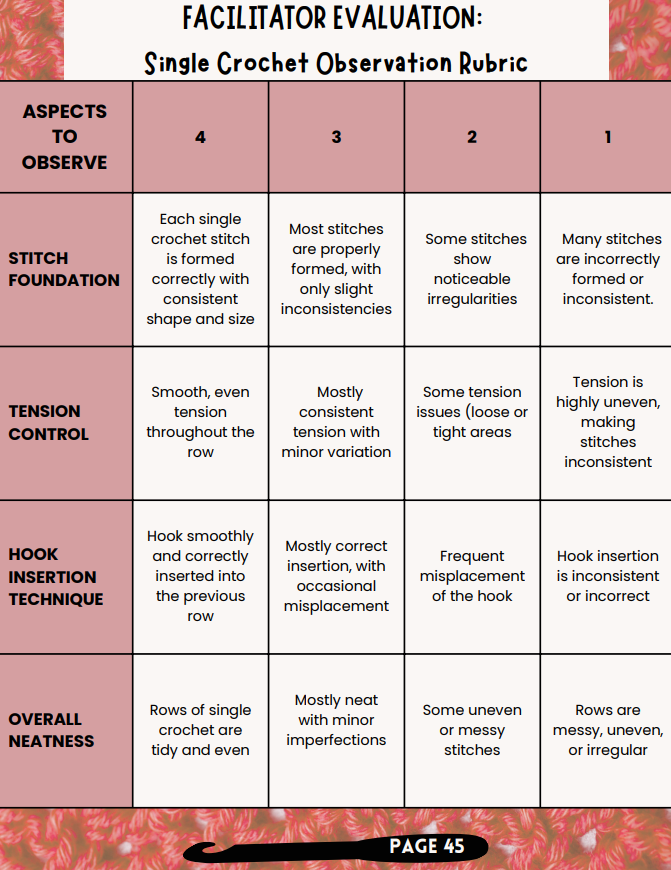
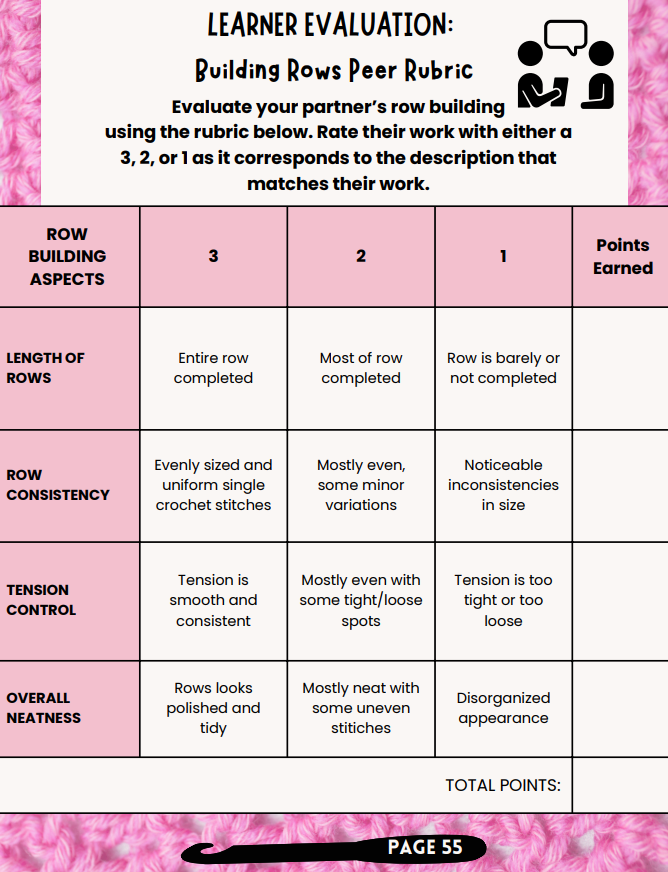
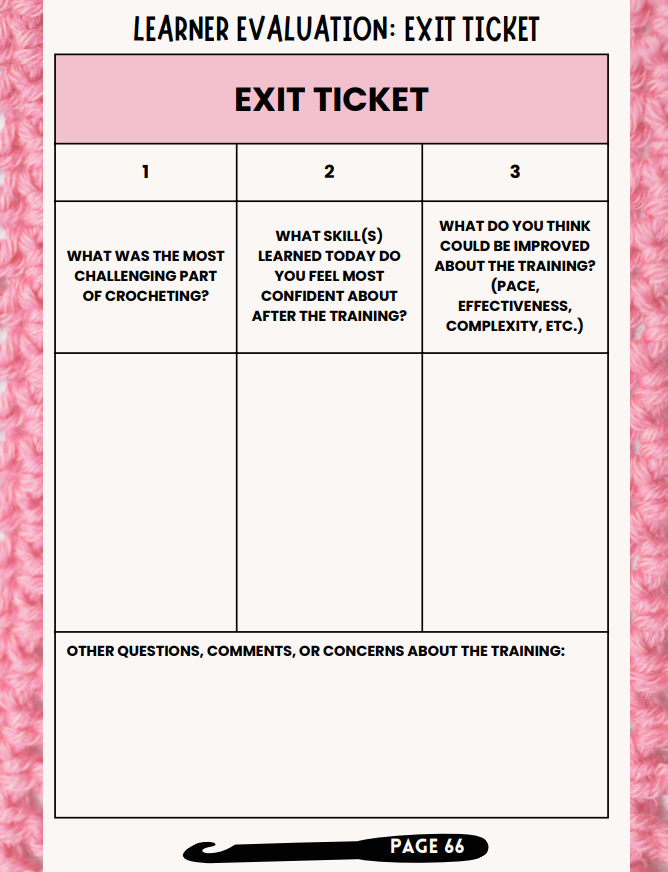
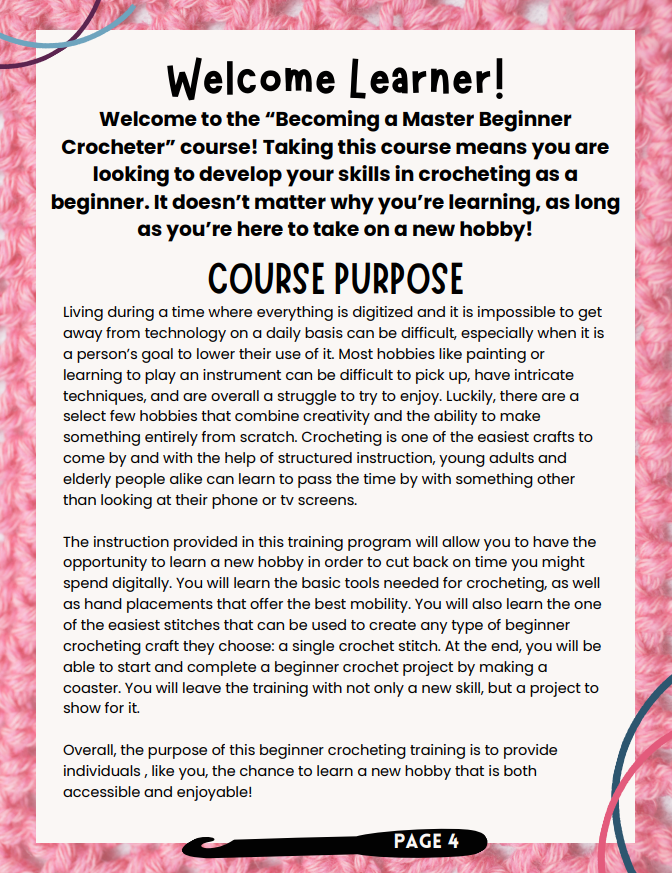
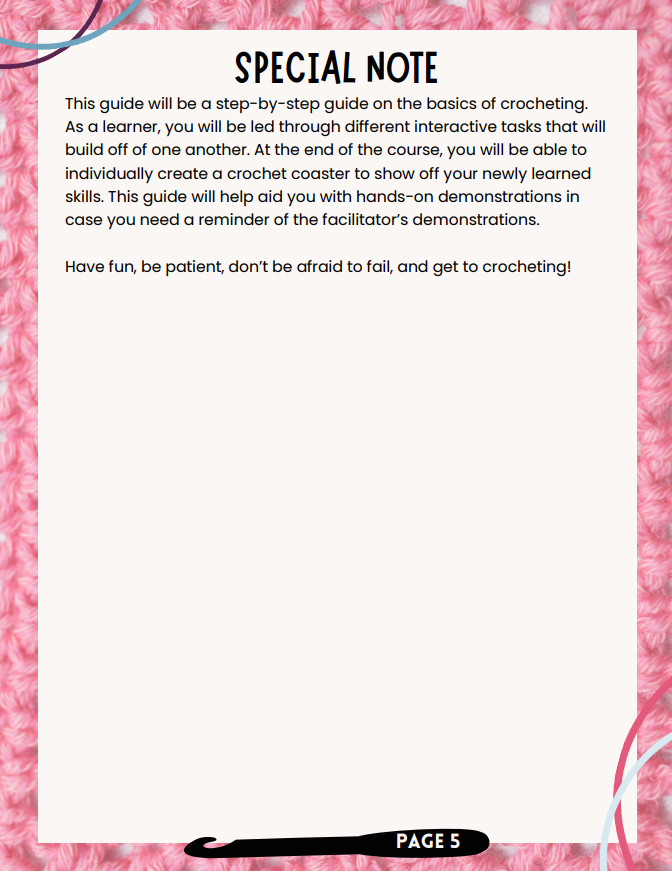
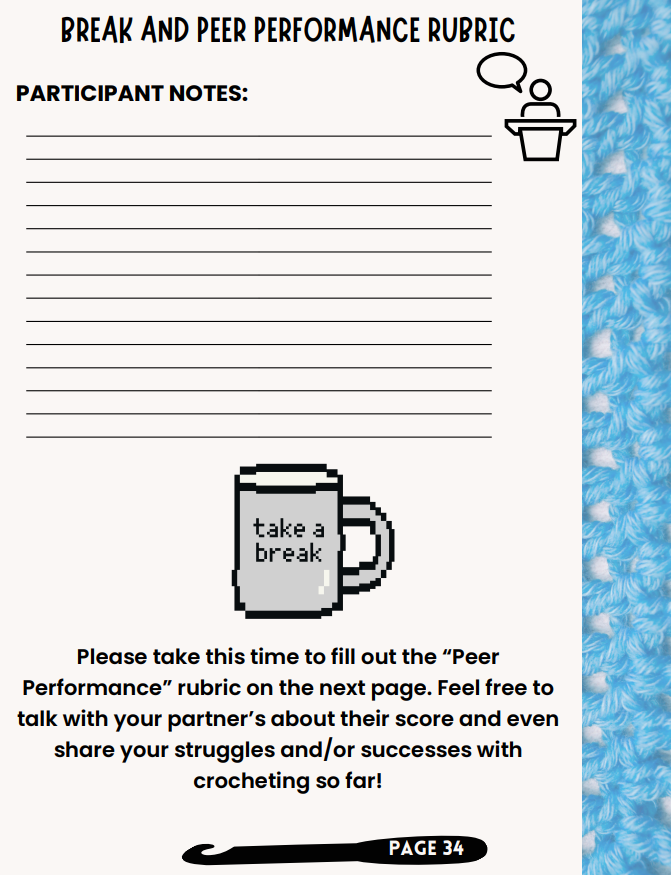
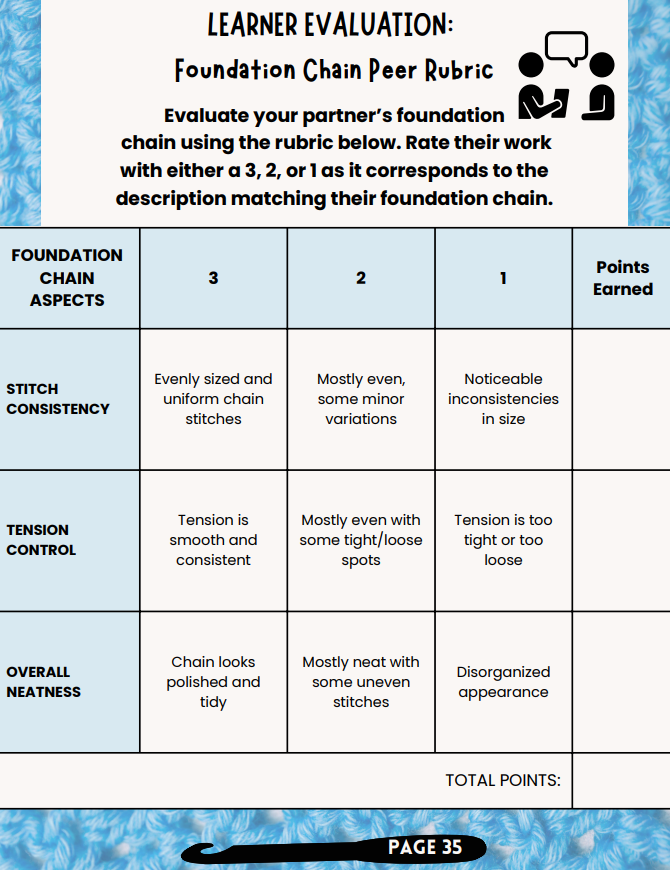
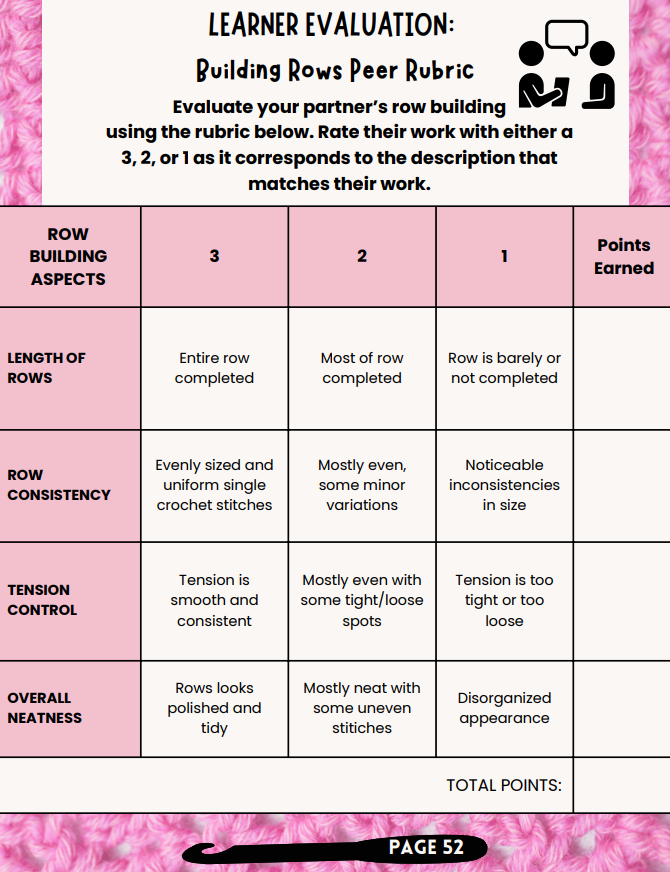
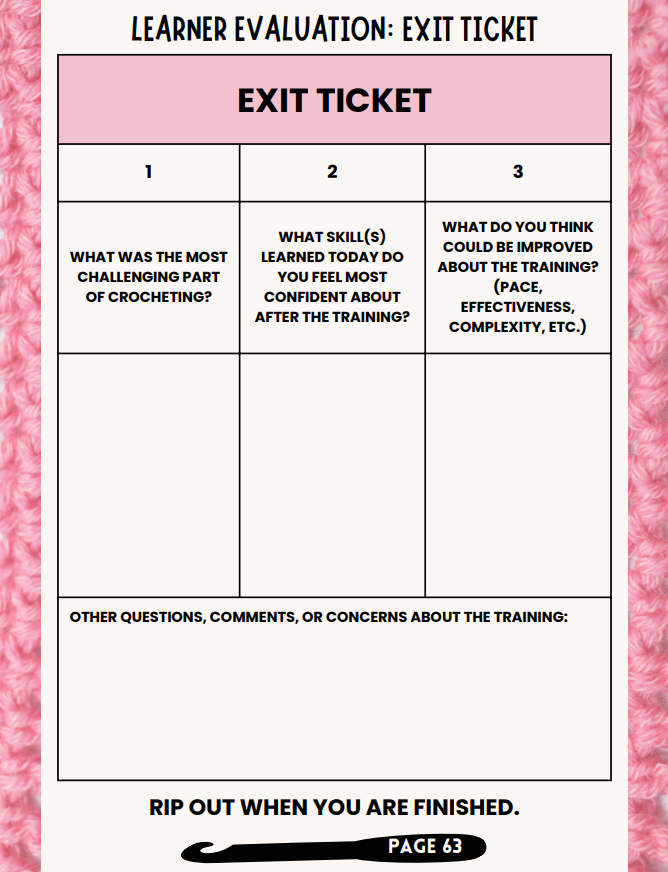
Similarly to the leadership development program mentioned previously, this design document includes an evaluation plan for future use as well as both participant and facilitator guides. The document provides a voluntary training focused on teaching individuals of different ages how to crochet for beginners. My project was developed due to my interest in working with non-profit organizations and developing instructional materials for those that may be working with underprivileged youth, senior citizens, or education programs in general. Crocheting is a hobby I do avidly and, oftentimes, makes time fly without being glued to my phone, so I wanted to create a training for those feeling the same way I might’ve when I picked up crochet needles for the first time: tired of being attached to the hip with my phone or lacking a fun pastime. The document offers both a learner and contextual analysis, and the instructional strategies that informed the design of the training. There were formative evaluative tools created for all four objectives presented for the training, including a checklist, a learner performance rubric, two peer feedback rubrics, in conjunction with verbal facilitator feedback and a group discussion. In addition to completed crochet coasters that served as a form of summative evaluation, an exit ticket that prompts learners to answer three questions relating to the tasks presented to hear their feedback on ways to improve the training if applicable. Using both formative and summative evaluations offers a well-rounded view on the effectiveness of the training, assessing to see if the instructional quality is meeting the overall objectives. Since this specific training created is voluntary, learner feedback is important and a crucial aspect of the evaluation process, a component made very prominent in the evaluation plan of this document.